
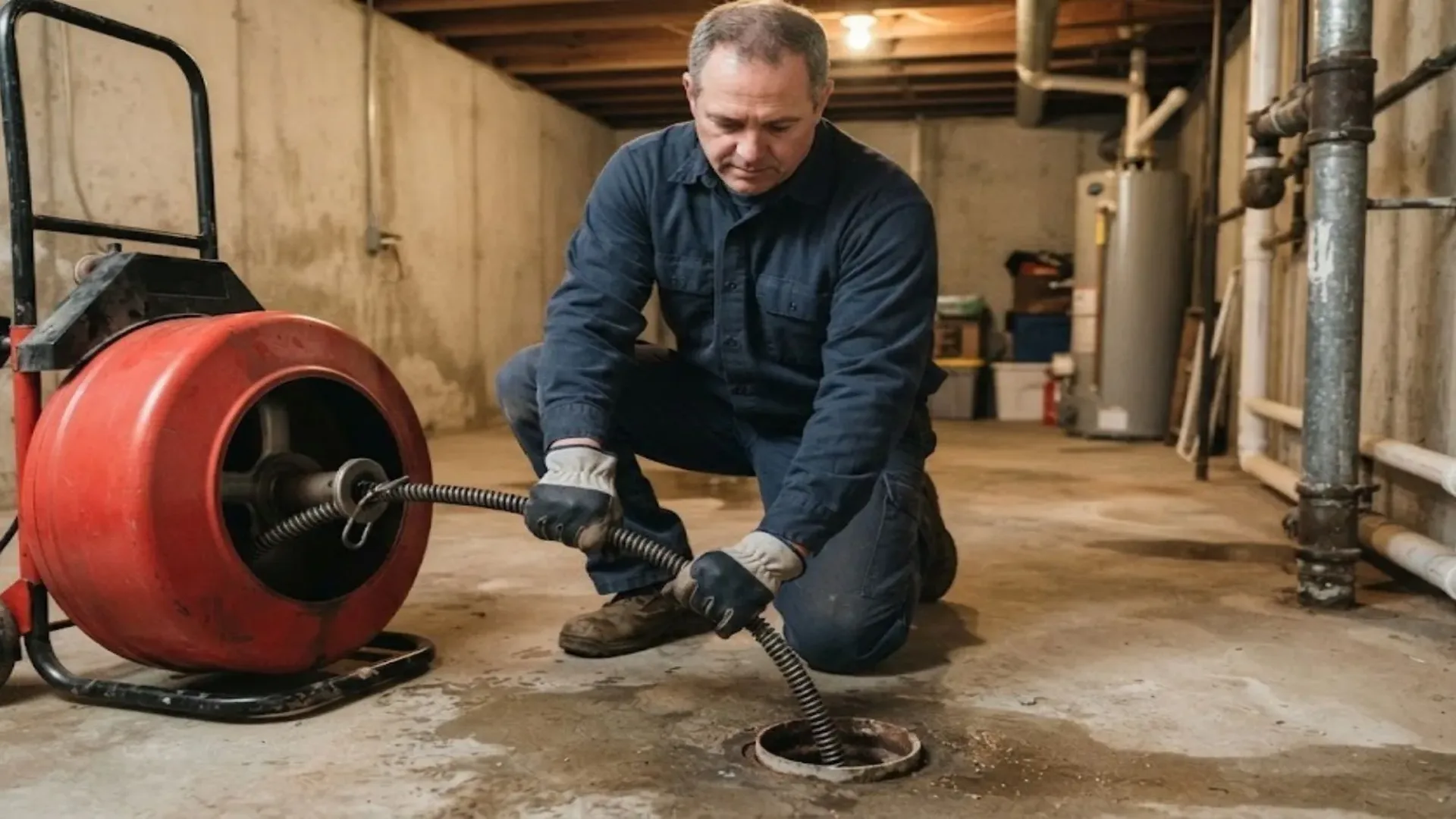
Yes, coconut oil clogs drains. It is liquid in a warm kitchen and solid once it cools, and a drain pipe is one of the coolest places in your house. Pour it down the sink and it hardens on the pipe wall, then catches food scraps and soap residue until the opening narrows.
Hot water does not fix this. It only carries the oil further down the line before it sets. A drain cleaning visit clears the buildup, and a garbage disposal repair covers the case where the oil gummed up the grinder.
The verdict, in one paragraph
Coconut oil is a saturated fat that melts a little above typical room temperature. In the pan or the sink it looks harmless. In a trap or a cold basement drain it turns back into a waxy solid, and each later rinse leaves another layer behind.
What happens to one spoonful on its way out
Follow the oil through your plumbing and the problem becomes easy to see.
| Stage | What the oil does | Result |
|---|---|---|
| At the sink | Pours out warm and clear | Looks like it vanished |
| In the P-trap | Cools against cold pipe and standing water | Starts to cloud and stick |
| In the branch line | Clings to walls, picks up soap, hair, and grounds | Narrows the passage |
| Near the main line | Hardens further in cooler runs, especially in a basement or crawl space | Slow drain, gurgling, odor |
| Months later | Layers of fat plus debris form a firm plug | Full clog that water alone cannot move |
Why it builds quietly for months
One spoonful never clogs a drain on its own. The trouble is the habit. Each rinse leaves a thin film, the film traps debris, and the next oil layer stacks on top. You notice the clog only when the passage is mostly closed.
This is also why dish soap and hot water give a false sense of safety. Soap breaks the oil into tiny droplets, which travel further before they rejoin and stick. The fat is still in the pipe, just somewhere you cannot see it. Homes in Byron Center face the same chemistry, with the extra septic concern.
Cold seasons make it worse. Michigan winters chill basement and slab pipes, so fat sets faster and sticks harder from late fall into spring. A kitchen that drains fine in August can start gurgling by January for exactly this reason.
Pour it down or deal with it right
What makes things worse
- Pouring melted oil down the sink with hot water.
- Washing pans without wiping out the oil first.
- Running the disposal while oil is in the sink.
- Using a harsh drain chemical on a fat clog.
What works
- Let the oil cool and set in the pan or a jar.
- Wipe pans with a paper towel before washing.
- Scrape the solid fat into the trash.
- Put food scraps in the trash or compost, not down the disposal.
A grease-safe kitchen routine
- Keep a wide jar by the stove for cooled cooking fat and let it set before discarding it.
- Wipe greasy pans and plates with a paper towel before they reach the sink.
- Fit a mesh basket strainer over the drain to catch food solids.
- Run cool water, not hot, while the disposal is grinding, so any fat solidifies and is chopped instead of smeared.
- Skip pouring the oil into the toilet or the floor drain, since both connect to the same system.
If you already poured it
A small amount rarely needs a service call. These steps help when you caught it early.
- 1
Stop sending more down
Make the sink off limits for fat while you work, and keep other fixtures going only if they still drain.
- 2
Scoop what you can
Remove the strainer, wipe the drain opening, and take out any visible solid fat with a paper towel.
- 3
Open the trap
Place a bucket under the P-trap, loosen the slip nuts, and clear the fat and debris by hand. Reassemble with the washers in place.
- 4
Flush with a plunger, not chemicals
A cup plunger on a sealed drain can shift a soft plug. Do not pour drain chemicals on top of a fat clog, because they mostly stay at the surface.
- 5
Call if it comes back
A clog that returns within days sits deeper in the line, where a cable or a jet is the right tool.
What fixes a coconut oil clog for real
Fat clogs respond to mechanical clearing and to hot, high-pressure water at the right stage. A cable breaks through the plug, and a jet scours the pipe wall clean so the film does not restart. The right choice depends on how much buildup sits in the line.
Skip DIY mixes of drain chemicals. Combining products can release harmful fumes, and an acid-based cleaner in a pipe with a fat plug can sit there and burn the pipe instead of clearing it.
Grease, drains, and the city side of the line in Wyoming, MI
The City of Wyoming accepts responsibility for sanitary sewer mains and the residential connections within the right of way. Your kitchen line on the private side is the owner's to clear and pay for. A grease clog in your own pipe is therefore a homeowner job, so deal with fat habits before the line backs up.
If water backs up in several fixtures at once, call Public Works at 616-530-7260 before a plumber, because staff are on call around the clock for sewer backups. If the cause is on the city side, they coordinate the repair. If it is on your side, a plumber clears it.
Outside the city's sewer, such as parts of Byron Center, some homes use septic systems. Kent County's septic and well program covers permits and evaluations there, and fats are especially hard on a septic tank. Ask the township or county which office covers your address, and check any plumber on LARA's licensee lookup.
Questions readers ask about this job
No. Hot water only moves it further along before it cools and sets. The oil ends up in a part of the pipe you cannot reach with a plunger.
One small amount is unlikely to cause a clog. Many small amounts over time do. Wiping and discarding the oil in the trash is the reliable habit.
All cooking fats can clog. Coconut oil solidifies at a warmer temperature than many liquid oils, so it sets sooner in a cool drain. Butter and lard behave much the same.
No. A disposal grinds solids and does nothing to fats. Oil coats the blades and the drain line below it, and can gum up the unit itself.
According to the city, call Public Works at 616-530-7260 first for a sewer backup, since it is staffed around the clock and handles problems on the city side at no charge. If it is on your private side, call a plumber.
If the job turns out to be more than a weekend project, our team handles drain cleaning and garbage disposal repair & installation, and the same 24/7 line covers Byron Center and Kentwood.
Drain slow after a greasy week?
Call (855) 575-2890 and a dispatcher will arrange a cable or jet visit to clear the fat for good.