
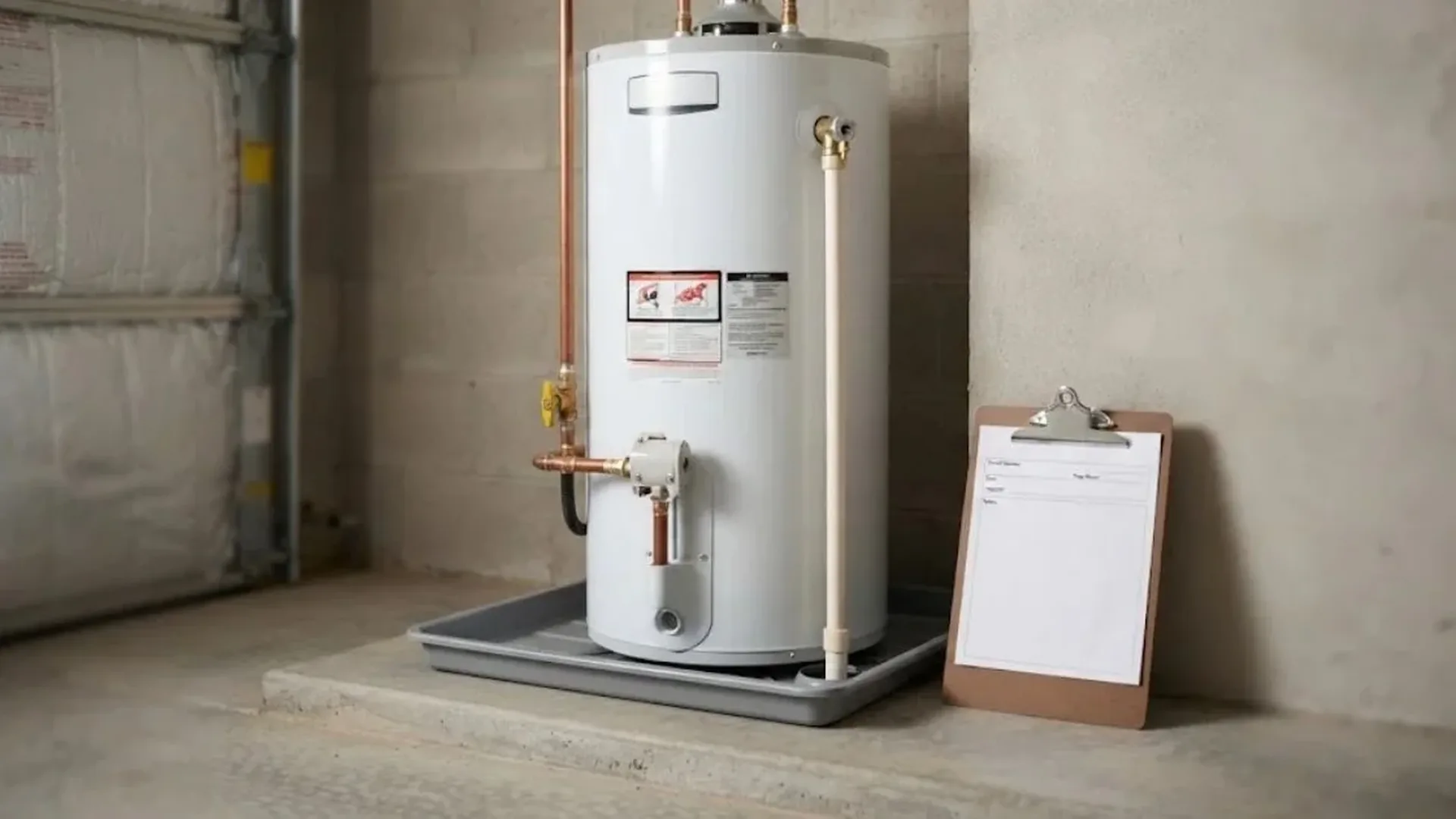
A water heater that leaks, rumbles or only gives lukewarm water can often be fixed, but the first job is finding out which part has failed. Our 24/7 line takes water heater repair calls in Wyoming at any hour. While you wait, shut the cold inlet if anything is dripping, and switch the heater off at the gas knob or breaker.
A repair visit starts with testing, not guessing. We check the power or gas supply, the controls, the heating source and the safety valve, then tell you whether the fix is worth doing, with a clear price before work starts.
What the symptom is telling you
The way a heater misbehaves narrows the cause quickly. These are the patterns we see most often.
No hot water at all
On an electric tank this points to a tripped limit switch, a bad thermostat or a burned element. On gas, the pilot, thermocouple or igniter is the usual suspect.
Hot water, but only briefly
A broken dip tube lets incoming cold water mix near the top of the tank. A failed lower element on an electric unit gives the same result.
Water that is too hot or swings
A stuck thermostat or a sensor out of calibration can overheat the tank. The relief valve may then discharge, which is a safety response, not the cause.
Rotten egg or metallic smell
Bacteria in the tank react with the anode rod and produce the odor. Replacing or swapping the rod and flushing the tank often clears it.
Knocking, popping or hissing
Sediment on the tank floor boils the trapped water. A flush may quiet it, though heavy scale can mean the tank is near the end of its life.
Water on the floor
Drips from the relief valve, a drain valve or a pipe joint are repairable. Water from the bottom seam of the tank is not, and that tank needs replacing.
Fix it or replace it: how the numbers usually fall
A repair makes sense when the tank is sound and the failing part is cheap relative to a new heater.
| Problem | Typical repair | Worth repairing? |
|---|---|---|
| Dead heating element | Replace element and test thermostat | Yes, if the tank is sound |
| Pilot out or igniter failure | Clean, relight or replace igniter or thermocouple | Yes |
| Dripping relief valve | Replace valve, check pressure and expansion | Yes, find the cause first |
| Broken dip tube | Replace tube | Yes, unless the tank is old |
| Rusted-through tank | None possible | No, replace the heater |
Age, rust at the base and repeated repairs tip the balance toward a new unit. If it comes to that, see our replacement page.
Gas, electric and hybrid heaters: what actually breaks
On a gas heater the burner assembly does the work, and a thermocouple or flame sensor tells the control that a flame is present. A dirty burner, a weak thermocouple or a draft problem makes the flame drop out, so the unit shuts down. The fix is typically cleaning or replacing a small part, and it takes far less time than a full swap.
Electric heaters use two elements, one near the top and one near the bottom, each controlled by a thermostat. When the upper one burns out you get no hot water, and when the lower one fails you get a short supply. Testing with a meter shows which part has died.
Hybrid heat pump models add a compressor, a fan, an air filter and a condensate drain, so symptoms can be as plain as a clogged filter or a blocked drain line. They also have a backup element, which is why a hybrid can seem fine in standard mode and quit in efficiency mode.
A leaking tank or a heater that will not shut off
Water running from the tank, or steam and a hissing relief valve, needs attention the same day. Our dispatch line is open 24/7, and same-day appointments are available when the schedule allows.
The relief valve is the heater's safety release. If it keeps discharging hot water, do not cap it or plug the pipe, since that removes the protection it provides.
- Close the cold water supply valve above the heater.
- Turn the gas control to off or switch the breaker off.
- Place a bucket under any dripping valve and keep it clear of the floor drain.
- Keep children and pets back from hot discharge water.
- Call (855) 575-2890 and tell dispatch what you see and hear.
Leak at the tank, or leak at a fitting
Usually a repair
- Water at the pipe unions or shutoff valve
- Drips from the relief valve or its discharge pipe
- A weeping drain valve at the base
- Moisture on the top of the tank only
Usually a replacement
- Water pooling under the jacket
- Rust streaks on the bottom seam
- Wetness along the insulation between jacket and tank
- Leak that returns after a fitting is fixed
Parts that wear out, and the ones we check first
The anode rod is a sacrificial metal rod that corrodes so the steel tank does not. Once it is spent, the tank starts to rust. Checking it every few years extends the life of a good heater, especially where water is hard.
The temperature and pressure relief valve, often called the T&P valve, protects against overheating and excess pressure. It should open and close cleanly. A valve that weeps constantly may point to high water pressure or a missing expansion tank.
The thermostat and upper limit switch on an electric tank are safety devices as well as controls. A tripped reset button usually means something else has failed, so we test the circuit before resetting it.
Not sure if it is a quick fix? We will test first
Call (855) 575-2890 and tell us what the heater is doing.
Energy suppliers and the permit question
Wyoming homes get natural gas from DTE Energy and electricity from Consumers Energy. If your heater has no flame or no power, check that a gas appliance shutoff or a breaker has not tripped before calling, and tell the dispatcher what you found. If you smell gas, leave the house and contact the gas utility first.
The City of Wyoming lists hot water heaters among the plumbing work that needs a permit. A straight repair, such as a new element or thermocouple, is a different job from a replacement, so ask us if your visit turns into a swap. If it does, we explain the permit and the 24-hour inspection notice before anything is installed.
Safety steps for a failing water heater
- If you smell gas, leave and call 911 or DTE Energy from outside.
- Turn the power off at the breaker, or the gas control to off.
- Shut the cold supply valve to the heater.
- Never cap or plug the temperature and pressure relief valve.
- Keep hot discharge away from skin because water can scald.
- Keep flammables clear of the area.
What a repair visit looks like
- 1
Listen and look
We ask what you saw, heard and smelled, then look at the tank, vent, pan and connections.
- 2
Test the supply
We confirm gas pressure or voltage, and check the breaker, shutoff and wiring.
- 3
Find the failed part
A meter, a gauge or a flame check isolates the element, sensor, valve or igniter at fault.
- 4
Quote it plainly
You get a clear price before work starts, along with an honest view on whether the tank is worth saving.
- 5
Repair and retest
After the new part goes in, we run the heater through a cycle and check for leaks, draft and temperature.
What affects a water heater repair bill
Repairs vary a great deal because the failed part, the heater and the access all differ.
Insurers may cover sudden water damage from a failed heater but usually not the heater itself or normal wear, so photograph the damage before it is cleaned up.
Call (855) 575-2890 for your real number once we know what is failing.
A hidden leak is not always the heater
Wet floors near a heater sometimes come from a supply line or a pipe in the wall, and the heater gets blamed. If you cannot trace a drip, our leak detection service finds the source without opening walls blindly.
We also work with homes in Walker and other towns around Wyoming, so a heater call outside the city line is not a problem.
When tankless is the better next step
A repair on an old tank only delays the day you replace it. If you are already considering a change, tankless water heater service shows what the switch involves in venting, gas supply and maintenance, so you can decide before the old heater quits for good.
Questions about water heater repair in Wyoming
Yes. Dispatch is 24/7, including weeknights, weekends and holidays, and we book same-day appointments when available. Call (855) 575-2890 and describe the leak or the symptom.
A weak thermocouple, a dirty pilot assembly or a draft in the vent are the usual causes. Relighting works once, but a pilot that keeps failing needs a part replaced, not another match.
You can try once, after turning the breaker off. If it trips again, a heating element or thermostat is likely failing, and repeated resets do not help.
A little drip while the heater is heating can be normal expansion. A steady flow or a hot discharge suggests high pressure or a faulty valve, and it should be inspected soon.
The city's page names hot water heaters among permit work, which applies to replacement. For a small repair, ask us what the job involves, and we will tell you if a permit becomes part of it.
No repair stops a leak from the tank shell. Leaks at valves, fittings or the relief line can be repaired, but a leaking tank itself has to be replaced.
Hot water back with a clear price up front
Our 24/7 line is ready when the heater fails.