
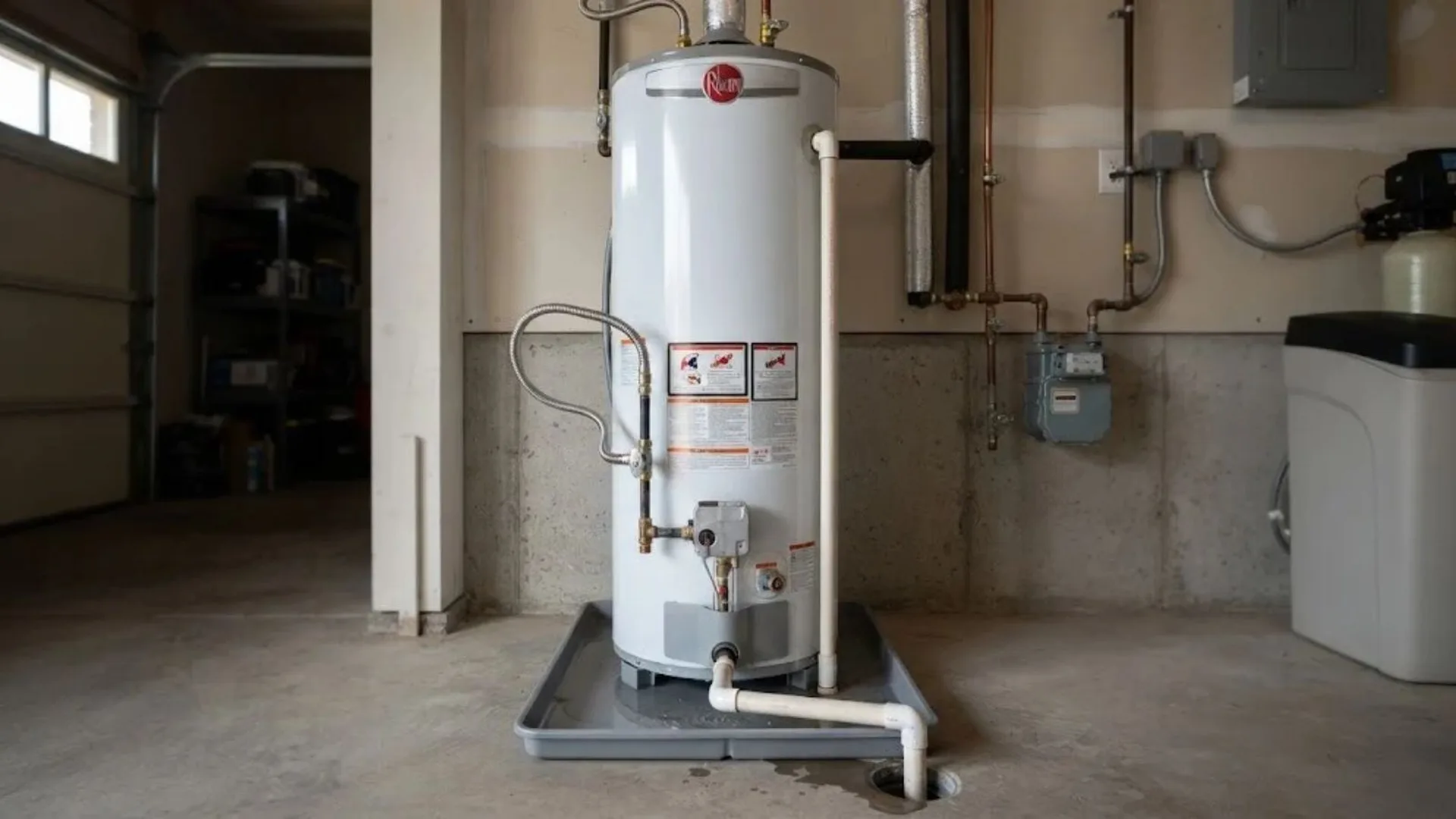
A tank that is pouring water across the floor or has gone cold for good needs water heater replacement in Wyoming now, not next week. Our 24/7 dispatch line answers at any hour. While you wait, close the cold supply valve above the tank, turn the gas control to off or flip the breaker, and keep people and pets away from the puddle.
Water heater replacement means draining the failed tank, carrying it out, setting a new unit, and reconnecting water, fuel or power, venting and the pressure relief valve. You get a clear price before work starts, and the permit step the city lists for this work is part of the plan, not an afterthought.
Tank leaking onto the floor right now
A slow weep from a fitting is one problem. Water coming from the bottom of the jacket or pooling under the whole tank usually means the steel shell has rusted through, and no repair closes that. The tank will not heal, and the leak tends to grow when the heater cycles.
Stopping the water matters more than saving the heater. Every hour a failed tank keeps filling, it keeps feeding the leak, and drywall, flooring and stored boxes soak it up. We are a plumbing crew, so drying and restoration work is outside what we do, which is one more reason to cut the supply fast.
- Close the cold water inlet valve on top of the tank, or the main shutoff if you cannot find it.
- Turn a gas heater's control knob to off, or switch the electric heater's breaker off at the panel.
- Do not touch the heater or any wet cord while standing in water.
- Open one hot tap upstairs to let pressure ease and slow the drip.
- Move boxes, rugs and electronics out of the spill path, then call (855) 575-2890.
Replace now or patch it: a quick decision grid
Not every bad heater needs to go. This grid shows how the common situations usually sort out.
| What you see | What it usually means | Usual direction |
|---|---|---|
| Water under the tank, steady or growing | Corroded shell has failed | Replace |
| Leak only at the pipe fittings or valve | Loose or worn connection | Often repairable |
| No hot water, tank dry and cold to the touch | Element, thermostat or igniter fault | Test first |
| Rumbling and rust-colored hot water | Sediment buildup and an exhausted anode rod | Replace if the tank is old |
| Tank in service for a long time and leaking anywhere | Age plus corrosion | Replace |
If the tank itself is leaking, the table is simple: replacement. For the other rows, our crew checks before recommending a new unit.
Signs the tank is finished
Most tanks give warnings before they fail. If you see two or more of these, plan the swap before the floor gets wet.
Damp or rusty base
Rust streaks around the bottom ring or flaking on the jacket point to a shell that is corroding from the inside out.
Popping and rumbling
Mineral scale settles on the tank floor and traps water beneath it. The water flashes to steam and makes the noise, and the scale cooks the lining.
Brown or metallic hot water
Cold taps run clear while hot taps look rusty. The anode rod has likely been consumed and the steel is now being eaten instead.
Hot water runs out fast
Sediment takes up space in the tank and a failing element or burner cannot keep up, so showers go cold sooner than they used to.
Moisture on the floor with no plumbing nearby
Check the drain pan and the relief valve discharge pipe before assuming the tank is gone. A wet pan points to the tank, a fitting or the relief valve, so dry it and watch where the water returns from.
Gas, electric or power vent: matching the new tank to the house
Wyoming homes rely on natural gas from DTE Energy and electricity from Consumers Energy, so the choice is rarely about availability. It is about what the old heater was connected to and what is practical to change.
Tankless units need larger gas lines and different venting, so tankless service is a planned upgrade rather than an emergency swap. Staying with the same fuel is almost always the fastest path on an urgent swap, because the gas line, vent or circuit is already there.
If you would rather plan a fuel change, our planned water heater installation page covers sizing and venting.
A standard atmospheric gas heater vents by natural draft, which needs a chimney or a rated vent run up through the roof. If the old flue is oversized or lined poorly, it can leave condensation and backdraft problems with a new, more efficient tank. A power-vent model uses a fan to push exhaust out through plastic pipe, which opens up the option of venting through a side wall.
Electric tanks need no vent at all, only a dedicated circuit of the right size and a space with room around the unit. They cost less to buy and install, but they typically cost more to run where gas is cheap. We tell you the trade-off plainly, and the final call is yours.
Where a heat pump (hybrid) tank fits
A hybrid heater pulls heat from the surrounding air and moves it into the tank, using far less electricity than resistance elements. It works best in a basement or utility room with decent volume of air and a condensate drain nearby, and it cools and dries the room slightly as it runs.
It also stands taller than a standard tank, makes some fan noise, and needs the right electrical supply. On an emergency swap we can still set one if the space and circuit allow it, but sometimes the right answer is a standard tank now and a hybrid when you can plan the upgrade.
Tank down? Get a clear price before the work starts
Call (855) 575-2890 and tell dispatch what the tank is doing.
Why hard Lake Michigan water shortens a tank's life
Wyoming has drawn its drinking water from Lake Michigan since 1966, and city and neighboring utility reports put hardness in the 140s ppm, roughly 8 to 9 grains per gallon. That is moderately hard to hard water, and every heating cycle drops a little scale onto the tank floor and the elements. Test your tap, and if the number is high, ask about a softener or a regular flush so the next tank lasts longer.
A flush once a year is cheap insurance on a new unit. If the tank is not the problem and only an element or thermostat has failed, a water heater repair may be the cheaper answer. It clears the sediment before it hardens into a crust, keeps the burner or lower element working directly on water instead of through scale, and lets you spot a failing anode rod early.
Older houses, older tanks: what the 1950s boom left behind
Much of Wyoming grew fast in the 1950s, after the 28th Street corridor was widened following the approval of US-131's route in 1952. Many homes from that era have had their water heater replaced at least once, often with a quick swap that reused the original venting and old shutoff valves. Corroded unions, undersized flue pipe and a missing drain pan are common things to check when a heater area is opened up.
A replacement is the right moment to fix those. New shutoff valves, flexible connectors, a proper relief discharge line and a drain pan with a drain path cost little against the tank, and they stop the next failure from becoming a flood.
The city permit and what it means for your swap
The City of Wyoming's Building Inspections page lists hot water heaters among the work that needs a plumbing permit before it starts. Permits are applied for online through BS&A or on a printed form, and the invoice is paid before the permit is issued. The permit holder schedules inspections with at least 24 hours' notice.
In practice this means a replacement is not finished when the water runs hot. A licensed plumber pulls the permit and books the inspection, and a homeowner doing the work personally must own and live in the dwelling. If you have been told a swap needs no permit, ask which office said so, since the city's own page says otherwise.
How an urgent swap runs, start to finish
- 1
Call and describe the tank
Tell dispatch the fuel type, rough tank size, where it sits and whether it is actively leaking. Same-day appointments when available, and we dispatch around the clock.
- 2
Make it safe
The crew isolates the water, fuel and power, then confirms the leak source so you know the tank really is the problem.
- 3
Agree on the unit and price
We go over fuel, size and any code upgrades, and give a clear price before work starts.
- 4
Remove and set
The old tank is drained and removed, the new one is leveled, piped, vented and given a pressure relief valve with a discharge line.
- 5
Test and walk through
We fill, light or power up, check for leaks and vent draft, show you the shutoffs, and explain the permit inspection step.
What moves the price of a water heater replacement
The number depends on a few things you can see before anyone arrives, and a few that only show up once the old tank is out.
Homeowner's policies often cover sudden water damage but rarely cover the tank itself when it fails from age, so check your policy and keep photos before cleanup.
Call (855) 575-2890 and we will give you the real number for your tank before any work starts. Crews also work in Kentwood and the surrounding Kent County towns.
Swap now or wait for a planned upgrade
Replace right away if
- The tank itself is leaking
- The home has no hot water and you cannot go without it
- The unit is old and has failed more than once
- Water is near electrical or living space
You can plan it if
- Only a fitting or valve is weeping
- The tank works but is noisy
- You want a heat pump or tankless upgrade
- You can pick a day that suits the schedule
Questions about water heater replacement in Wyoming
Yes. Our dispatch line runs 24/7, including nights, weekends and holidays, and we book same-day appointments when available. Call (855) 575-2890, say whether the tank is leaking, and we start with how to make the situation safe.
Often yes. The decisions are the circuit, the room, and what happens to the old vent. Switching fuel costs more up front than swapping like for like, so on an urgent call many people choose the same fuel and plan the change later.
The City of Wyoming's Building Inspections page names hot water heaters among permit work. The permit is applied for before work starts, and inspections are booked with at least 24 hours' notice. A licensed plumber handles the paperwork, or the owner who lives in the home can apply directly.
Dry the tank and fittings with a towel, then watch. Drips from a pipe joint or valve can often be repaired, while a dripping relief discharge line can mean excess pressure or temperature and should be checked rather than wiped up. Water coming from under the jacket or from the bottom seam means the tank has failed.
It can. Scale builds on the tank floor and on elements, and local reports put hardness in the 140s ppm. A yearly flush and a check of the anode rod help, and a softener makes a bigger difference if your tap test shows high hardness.
Hauling off the old tank can be part of the job, and we confirm that when we price it. The details depend on the job and the access.
A new tank, set safely, with the permit step in hand
Our 24/7 line is open now, so call when the heater fails.