
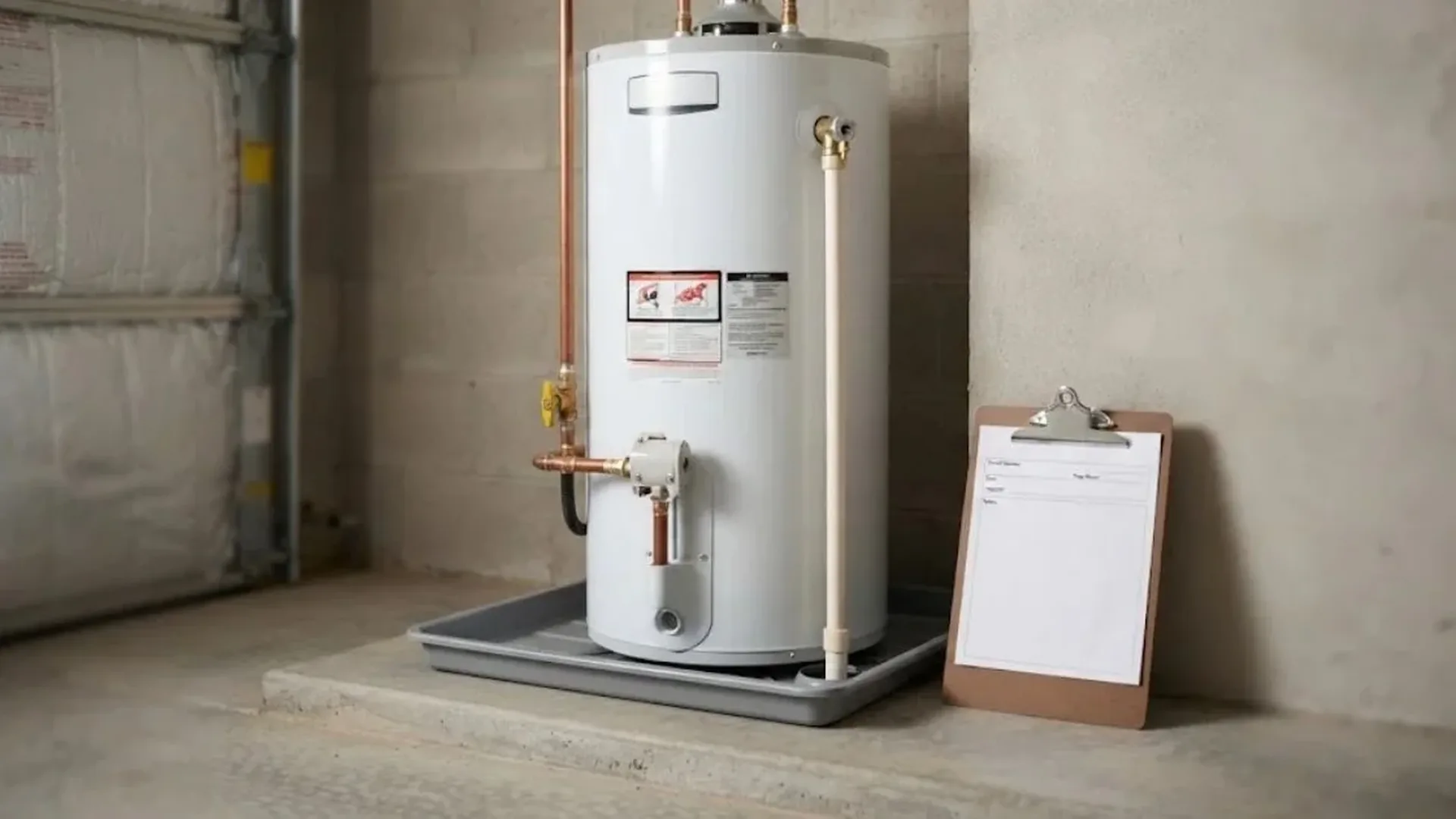
Hot water that fades to lukewarm after a few minutes, while the tank still feels hot, usually means a failed dip tube. The dip tube is a plastic pipe inside the tank that carries incoming cold water down to the bottom. When it cracks or shortens, cold water spills in at the top and mixes with the hot supply.
Replacing it is a realistic job for a careful homeowner. You shut off power or gas, drain part of the tank, pull the old tube, and drop in a new one. If the tank is old, leaking, or the fitting will not budge, a water heater repair visit is the safer route. This guide covers both paths for Wyoming, MI homes.
What the dip tube does inside the tank
Hot water rises, and cold water sinks. A water heater uses that fact on purpose. The burner or lower element warms the bottom of the tank, and the hot water collects at the top where the outlet pipe draws it off.
The dip tube makes this work. It connects to the cold inlet at the top of the tank and runs nearly to the floor of the tank, so new cold water enters at the bottom, right next to the heat source. Without it, cold water would pour in beside the hot outlet and cool the supply you are trying to use.
Most dip tubes are plastic, and they live in a hot, mineral-rich environment for years. Over time they can become brittle, crack, or break into pieces that float up and clog small screens on faucets and shower heads.
Signs the tube has failed
One symptom alone does not prove it. Two or three together make a strong case.
Hot water runs out fast
Showers start hot and turn lukewarm within a few minutes, even though the heater is set where it always was.
The tank feels hot but the tap does not
Touch the hot outlet pipe near the top of the tank. If it is hot while taps run warm, the tank is heating but mixing is wrong.
White or gray plastic bits at fixtures
Small flakes in aerators, shower heads, or washing machine inlet screens can be pieces of a broken tube.
Heater runs more than it used to
With cold water mixing in at the top, the thermostat keeps calling for heat. Gas bills or electric use can creep up.
Rumbling and popping noises
These point to sediment, not the tube itself, but a tank with heavy sediment often has an aging tube as well.
Dip tube or something else?
Several faults mimic a bad dip tube. This table separates them by the clues you can check without tools.
| Fault | What you notice | First thing to check |
|---|---|---|
| Failed dip tube | Hot at first, then lukewarm. Tank outlet is hot. | Plastic flakes in aerators |
| Sediment buildup | Popping or rumbling, slower recovery | Flush a few gallons from the drain valve |
| Burned-out element (electric) | No hot water, or only a small amount | Breaker, then element continuity |
| Faulty thermostat | Water too cool or too hot all the time | Temperature dial setting |
| Crossed hot and cold lines | Hot water turns cool when a nearby tap opens | Mixing valve or shared fixture |
If the first check does not explain the symptom, treat the tube as the likely cause only after you have ruled out the thermostat and element.
Dip tube swaps follow the maker's manual
A dip tube swap is a part replacement, so the heater maker's instructions govern it rather than a code section. The 2021 Michigan Plumbing Code (based on the 2021 IPC) matters if the tank itself is replaced, and Wyoming requires a permit for that.
Check the manual for the correct part before you buy one. Wrong or mismatched tubes are a common reason a second visit is needed, and the label on the heater lists the model you need.
Safety before you touch the heater
Electric heaters: switch off the breaker for the heater and confirm the power is dead before opening any panel. Gas heaters: turn the gas control to the off or pilot position. If you smell gas at any point, do not flip switches or light anything. Leave the house and call 911 or the gas utility from outside.
Hot water can scald. Let the tank cool for a few hours before draining, and keep a hose pointed at a floor drain or outdoors.
Replacing the tube, step by step
Set aside a couple of hours and have a bucket, a hose, an adjustable wrench, and replacement thread tape or the new nipple ready.
- 1
Kill power or gas and close the cold supply
Turn off the breaker or set the gas control to off. Close the cold water shutoff valve above the heater so no new water enters the tank.
- 2
Open a hot tap and drain the tank partway
Open a hot faucet upstairs to let air in. Attach a hose to the drain valve and drain until the water level falls below the cold inlet at the top. Draining everything is not required.
- 3
Disconnect the cold inlet
Unscrew the union or flexible connector from the cold inlet nipple. Then use a wrench to back the inlet nipple out of the tank. The old tube is attached to it or sits just behind it.
- 4
Pull out the old tube and compare
Slide the tube out. A healthy one is nearly as long as the tank is tall. A short or snapped piece confirms the diagnosis. Fish out any fragments you can see.
- 5
Install the new tube and reseat the nipple
Insert the new tube, fit a new or cleaned nipple with fresh thread tape, and tighten it snugly without cranking on the tank. Reconnect the supply line.
- 6
Refill, purge air, then restore power or gas
Open the cold valve with a hot tap still running. Let water flow until it runs steady, then close the tap and check every joint for drips. Only then turn power or gas back on.
When the tank is the bigger problem
A dip tube costs little compared with the heater around it. If the tank is rusting at the base, leaking at a seam, or has needed several repairs in a row, a new tube only delays the larger decision. In that case a full water heater replacement makes more sense.
Stop and call if the inlet nipple will not turn, if you see corrosion at the top fittings, or if you are not comfortable working near gas. Forcing a seized fitting can crack the tank connection and turn a small job into a flood. We dispatch to Wyoming, Grandville, and nearby towns around the clock.
Before you buy the part
- Write down the brand, model, and capacity from the label on the side of the tank.
- Confirm whether the inlet is on the top or side, since tube length differs.
- Check that the heater is not still covered by a manufacturer warranty that you would void by opening it.
- Buy thread tape or a new brass nipple if the old one is pitted.
- Photograph the plumbing so you can reassemble it the same way.
- Plan to flush the tank at the same time, since the tube is already open.
- If your tank is in a tight closet, ask whether a second person can help move supply lines.
Dip tube and heater work in Wyoming, MI
Water in this area is moderately hard. City and neighboring utility reports put hardness in the 140s ppm, roughly 8 to 9 grains per gallon. That mineral load settles as scale on the tank floor and coats plastic parts, so plan to flush the tank yearly and expect tubes to age faster than in soft water areas.
Wyoming requires a plumbing permit before work starts on hot water heaters. A dip tube swap is a repair, not a replacement, but if you open the tank and decide to install a new heater, call Building Inspections at 616-530-7285 first. Homeowners who live in the home can pull their own permit, and the permit holder schedules inspections with at least 24 hours' notice.
If you hire help, check the license on the State of Michigan LARA licensee lookup before work begins. It confirms the person holds the right plumbing license, which matters because the city requires work to be done by a licensed person or by the owner who lives in the dwelling.
Questions readers ask about this job
Plastic tubes often last many years, but there is no fixed number. Water heat, minerals, and the tube material all play a part. If your heater is old and hot water fades, suspect the tube.
Yes, it is safe, but you will get less usable hot water and the heater will run more. Plastic pieces may also clog fixtures, so replace the tube soon.
No. Drain until the water level sits below the cold inlet at the top. That keeps the job shorter and avoids wasting hot water.
The city lists permits for water heater replacement, not tube repair. Call Building Inspections at 616-530-7285 to confirm what applies to your job, and expect a permit if the whole heater changes.
It depends on leaks and rust. A sound tank with a bad tube is a good repair candidate. A tank that leaks or shows corrosion should be replaced.
If the job turns out to be more than a weekend project, our team handles water heater repair and water heater replacement, and the same 24/7 line covers Kentwood and Grandville.
Hot water fading on you?
Call (855) 575-2890 and we will diagnose the tube, the tank, or the thermostat, with a clear price before work starts.