
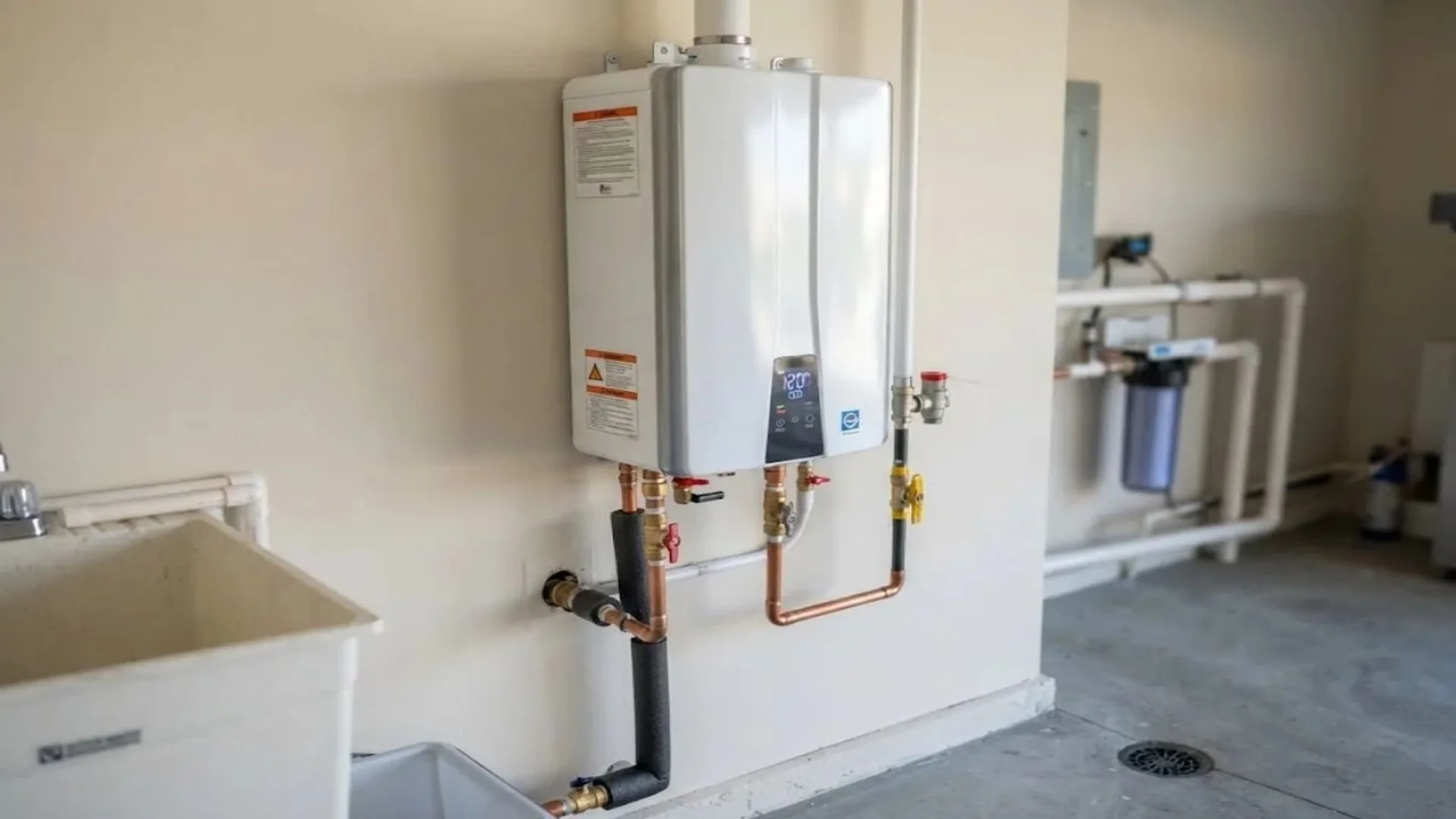
Water heater installation in Wyoming goes best when you choose the unit before the old one fails. A planned job lets you pick the fuel, fit the venting properly, book the permit inspection and schedule a day that suits you.
We install tank, power-vent, heat pump and tankless units in existing homes, remodels and new construction. You get a clear price before work starts, and same-day appointments when available if your plans shift. If a heater fails suddenly, the 24/7 line still takes that call.
Planning the job before anyone lifts a wrench
Most installation problems trace back to decisions made too late. A short checklist of questions settles most of them.
- 1
Describe the space
Tell us where the heater will sit: basement, closet, garage or utility room. Note the ceiling height, door width and any stairs the unit has to travel.
- 2
Decide on the fuel
Natural gas, electric or heat pump each need different connections. The cheapest to buy is not always the cheapest to run.
- 3
Size it to the household
Count the people, the bathrooms and the biggest simultaneous demand, such as a shower and a dishwasher running together.
- 4
Check the venting path
Gas units need a safe way to exhaust combustion gases, and the old flue may not suit a new model.
- 5
Book the permit and a date
The city lists hot water heaters under plumbing permits, so the permit and inspection fit into the schedule.
Sizing: why bigger is not automatically better
A tank's first-hour rating tells you how much hot water it can deliver in a busy hour, which matters more than its gallon label. A family with long showers and a soaking tub wants a higher rating than two adults who shower briefly. An oversized tank wastes energy keeping extra water hot all day.
Recovery speed matters as much as size. Gas heaters reheat quickly, standard electric tanks recover more slowly, and heat pump models are slower still in efficiency mode. If your household has peak-time demand, choose by first-hour delivery, not by tank volume alone.
Gas, electric and heat pump side by side
Each option fits some homes better than others. The table gives the practical differences.
| Type | What it needs | Main trade-off |
|---|---|---|
| Natural gas tank | Gas line, vent, combustion air | Fast recovery, vent must be right |
| Power-vent gas | Gas line, outlet, plastic vent pipe | Flexible venting, adds a fan |
| Standard electric | Dedicated circuit, no vent | Simple install, slower recovery |
| Heat pump hybrid | Circuit, air volume, condensate drain | Lowest electric use, taller and louder |
| Tankless gas | Larger gas line, special vent | Endless supply, more upkeep |
Wyoming gets gas from DTE Energy and electricity from Consumers Energy, so either fuel is available on most streets.
Venting, combustion air and the gas line
A gas heater must carry exhaust gas out of the house safely. Natural draft models rely on a chimney or a vertical vent that rises steadily, while power-vent models push exhaust through plastic pipe, even through a side wall. A water heater that backdrafts can put carbon monoxide into the house, so venting is not a place to cut corners.
Combustion air matters as well. A heater in a tight closet needs vents or ducting to draw in enough air, otherwise the flame burns poorly. When a furnace and heater share a flue, a new heater can change how both draft, so we check the whole path.
The gas line gets checked for size and a sediment trap, plus a shutoff valve within reach. If you want a larger unit or a tankless model, the existing pipe may need upgrading.
Expansion tanks, pressure and the other small parts
When cold water heats up it expands, and in a closed system it has nowhere to go. An expansion tank gives that water room so the pressure does not spike. Without one, a relief valve may drip, fittings may wear and appliances may fail early.
A new install is also the time for fresh shutoff valves, flexible connectors, a drain pan with a drain line and a relief discharge line that ends where it can be seen. These parts cost little and prevent the most common installation callbacks.
The permit path through the city
The City of Wyoming lists hot water heaters among the work needing a plumbing permit before it starts. You apply online through BS&A or with a paper form, and the invoice is paid before the permit is issued. Contractors register first, and homeowners need not.
To pull the permit you must hold the Michigan license for the work or be the owner and resident of the dwelling. The permit holder schedules inspections with at least 24 hours' notice, so build a day for that into your plan. Skipping the permit can complicate a home sale or an insurance claim later.
Pick a unit and a date that suit your home
Call (855) 575-2890 to plan the install and get a clear price first.
Existing home or new build: what changes
Replacing in an existing house
- Work around the current gas, vent and water lines
- Closet or basement size limits the model
- Old shutoffs and unions often need replacing
- Often the same fuel as before
New construction or remodel
- Run the vent and circuit where you want them
- Choose a hybrid or tankless without retrofit limits
- Plan the drain, pan and expansion tank early
- Coordinate rough-in and final inspections
Planning to switch from gas to a heat pump tank
A heat pump heater draws warmth from the room air, so it likes a space of decent volume and a nearby drain for condensate. It also needs a circuit sized for the unit, and your electrical panel must have room. We confirm these before ordering anything.
If the panel or the room is not ready, a standard tank now and a hybrid later can be the better sequence. Electrical panel work is outside plumbing, so a licensed electrician handles that part.
Reasons homeowners schedule an install
Old tank still working
A heater past its middle years can fail without warning. Planning the swap avoids a flooded basement and a rushed purchase.
Remodel or addition
New bathrooms raise demand. A larger tank, a second unit or a tankless model may suit the new load.
Fuel switch
Some owners move from gas to electric or heat pump for efficiency or to retire a gas appliance.
Service flush and tune-up
If a flush shows the tank is badly scaled, we help you decide whether to keep it or replace it on your timeline.
What shapes the price of an installation
The price for a planned installation comes from the unit and from everything around it.
Insurance seldom covers a planned replacement, though some utility or manufacturer programs offer rebates on efficient models, so check before buying.
Call (855) 575-2890 for the real number for your home once we know the unit and the space.
Beyond the city line: Byron Center and nearby homes
We install in Byron Center and neighboring areas too. Permit offices differ from town to town, and some homes outside city water use wells, so ask the township or Kent County which office covers your address before you schedule.
Homes on private wells and septic need different water treatment and sometimes a different tank. Tell us at the start so we plan the filter, the sediment load and the pressure.
Pairing a new heater with other plumbing work
An install is a good time to look at nearby pipes. If the supply lines near the heater are corroded or the shutoff valves are stuck, our plumbing installation work can replace them in the same visit.
If you are comparing a tank to an on-demand unit, tankless water heater service explains the upkeep and the vent and gas changes. And if the old unit has already failed, replacement is the urgent path.
Questions about water heater installation in Wyoming
A like-for-like tank swap usually takes part of a day. Fuel changes, new venting or electrical work take longer, and the permit inspection is scheduled separately with 24 hours' notice.
The city's Building Inspections page lists hot water heaters among permit work. You apply online through BS&A or on a paper form, and the permit holder books inspections at least 24 hours ahead.
The city allows an owner who lives in the dwelling to apply for the permit. Gas and venting errors are dangerous, though, so many owners hire a licensed plumber for that part.
It depends on the number of people, bathrooms and simultaneous use. We compare first-hour delivery to your peak demand, since tank volume alone can mislead.
It uses much less electricity, but it costs more to buy and needs space, air and a drain. It suits a basement with room and a house where electricity is the fuel.
Call the 24/7 line. A failed tank is handled as an urgent replacement, and we can still discuss the upgrade you were planning.
Plan the heater before the old one decides for you
Call (855) 575-2890 and we will walk through your options.