
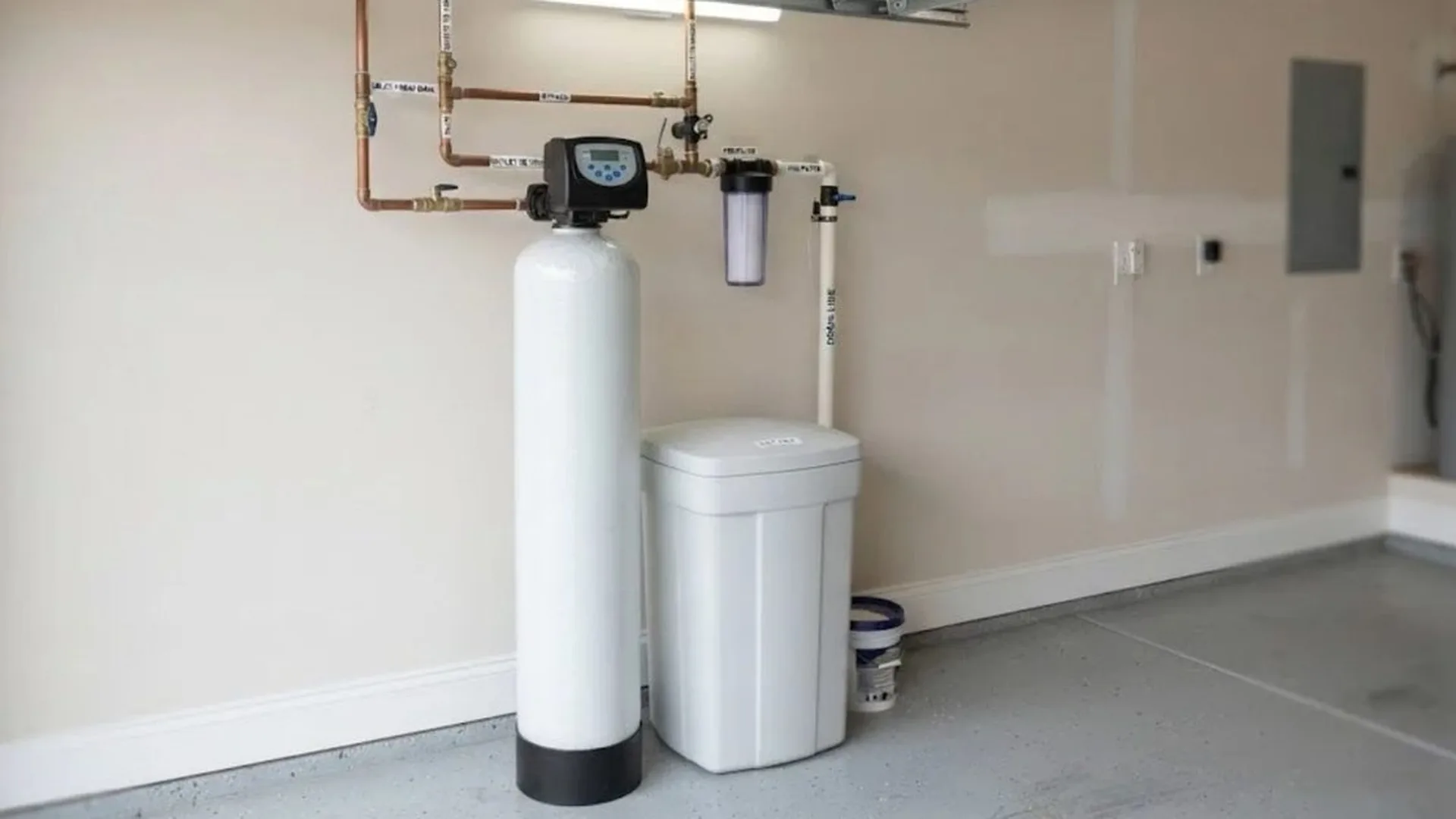
Water softener and filtration work in Wyoming starts with the mineral content of Lake Michigan water, which has supplied the city since 1966. A softener swaps hardness minerals for sodium or potassium. A filter removes particles, chlorine taste or odor, and the two do different jobs.
This is planned work. If a softener has stopped regenerating, leaks at the brine tank or leaves scale on your fixtures, we can service it, replace it or help you decide whether you need one at all.
How hard is the water here?
City and neighboring utility reports put hardness in the 140s ppm, roughly 8 to 9 grains per gallon, so test your tap. The city's own water page lists calcium at 39 mg/L and magnesium at 13 mg/L, and those two minerals are what make water hard. Water in that range leaves chalky rings on glass, mineral crust on faucet aerators and a film on shower doors, which is the practical signal that a softener could help.
Hardness is not a health problem. It shortens the life of water heaters, dishwashers and fixtures and makes soap less effective. Ask the utility for its annual water quality report, which the city mails before July 1 each year, and compare it with a home test kit result.
Softener, filter or both
Each device handles a different part of what comes from the tap.
| Device | What it does | What it does not do |
|---|---|---|
| Water softener | Removes calcium and magnesium that cause scale | Does not filter particles or improve taste |
| Carbon filter | Reduces chlorine taste and odor | Does not reduce hardness |
| Sediment filter | Catches sand and rust particles | Does not change hardness or taste |
| Softener plus filter | Handles scale and taste together | Costs more and needs two sets of maintenance |
| Drinking water filter at one tap | Treats drinking and cooking water only | Leaves the rest of the house untreated |
Plumbing in a softener: code and the maker's manual
Connecting a softener to the water line falls under the 2021 Michigan Plumbing Code, based on the 2021 IPC, and installs that alter supply piping are permit work in Wyoming. The regeneration drain connection matters too.
Follow the unit's manufacturer instructions for salt, bypass and drain settings. Start with a tap test, since local reports put hardness in the 140s ppm.
Signs a softener has stopped doing its job
Scale is back
Chalky buildup on fixtures and glass returns after a period of clean results. The resin bed may be exhausted or the control valve may not be regenerating.
No salt use
A brine tank that never goes down means the unit is not drawing brine. A salt bridge, a crust that forms across the salt, is a common cause.
Water feels slick or salty
A unit that rinses poorly can leave residue. The cause may be a stuck valve or a clogged injector.
Leaks or standing water
Leaks at the brine tank, the drain line or the bypass valve need prompt service. Moisture around the unit is not normal.
Low pressure after the softener
Resin beads that escape or a clogged screen can restrict flow through the unit.
What a service visit looks like
- 1
Test the water
We test the incoming water so we can compare hardness before and after the unit.
- 2
Inspect the brine system
We check salt level, look for bridging and clean the brine tank if needed.
- 3
Check the control valve
We confirm the unit regenerates on schedule and the bypass works.
- 4
Look at the resin
A softener with old resin may need a rebed or a replacement.
- 5
Report back
You get a plain answer on whether to repair, service or replace the unit.
Scale on every faucet?
Call to talk through a test, a repair or a new softener.
Repairing an old unit versus fitting a new one
Repair is reasonable when
- The control valve or injector is the failure.
- The tank is sound.
- The system is the right size for the household.
- Service parts are available.
Replace when
- The tank is cracked or leaking.
- The resin is exhausted and the unit is old.
- The household has grown since it was installed.
- The model is a discontinued conditioner design.
Scale and tankless heaters
Tankless water heaters heat water quickly through a small heat exchanger, and scale collects inside it. Even moderately hard water coats the exchanger over time, reducing flow and efficiency. Many tankless owners flush the unit regularly, and a softener upstream reduces how often. See our tankless water heater page for service, and our water heater repair page if a tank unit is acting up.
What the city says about PFAS
The city reports sampling that found less than 5 ppt of PFOA and PFOS. A softener is not designed to remove those compounds, and we do not make claims beyond the city's own statement. If you have a specific concern about your water, ask the utility or a certified testing lab and then decide what treatment fits.
Installing a new system
A new softener needs a spot near the main water line, a floor drain or standpipe for backwash, and a power outlet. Piping changes are our part of the job, and bypass valves let you shut off treated water if you ever need to. Our installation service covers new treatment equipment, and we also help homes in Grandville with the same needs.
Safety steps around brine and bypass
- Unplug the softener before opening the control head.
- Set the bypass valve before touching any plumbing.
- Keep salt and brine away from children and pets.
- Never mix cleaning chemicals in the brine tank.
- Wipe up spills at once, because wet salt floors are slippery.
What affects the price
Water treatment work varies with the equipment and the home.
Water treatment equipment is generally not covered by insurance, unless a sudden leak causes damage.
A clear price comes before work starts, so call (855) 575-2890 for your real number.
Questions about water softener & filtration in Wyoming
Moderately hard to hard, based on utility reports for Lake Michigan water in this area. A home test kit tells you your own tap result.
If your problem is scale, you need a softener. If it is taste or odor, a carbon filter handles it. Some homes need both.
No. A softener targets hardness minerals, not PFAS or lead. For a specific concern, ask the utility or a certified testing lab, and we can discuss which treatment fits.
Check the brine tank monthly and keep it at least a quarter full. The need changes with household size and water use.
Most modern units work fine with septic, though backwash volume is worth asking about. Homes in the Byron Center area on private septic systems should mention their setup.
Switch the unit to bypass and shut off its water supply. Our line runs 24/7 for active leaks, and treatment-only issues can wait for a scheduled visit.
Protect heaters and fixtures
Ask about service or a new system sized to your home.