
Never use a torch, lighter, or any open flame on a frozen pipe. Fire can ignite framing, scorch lines, and turn a cold-weather nuisance into a house fire. The safe method is slow, gentle warmth applied to the frozen section while a nearby faucet stays open.
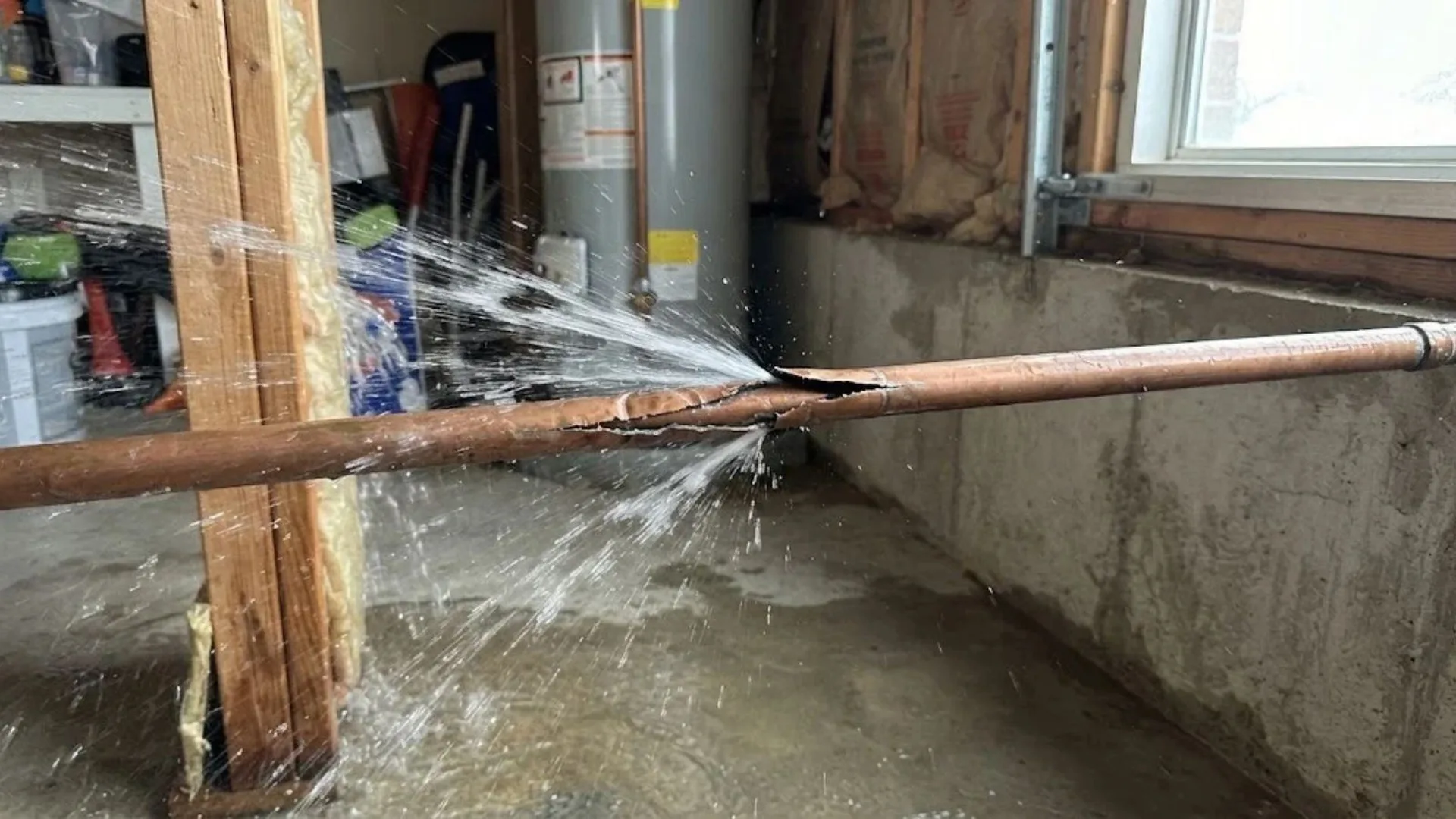
A frozen pipe is a blockage of ice, not always a break. If water still runs a trickle, or one tap is dry while others work, you can often thaw it yourself. If you see water, hear hissing, or the pipe is bulging, stop and shut off the main valve, because thawing may release a leak. In that case burst pipe repair is the right call.
Three rules before you start
One: no open flame, ever. That includes propane torches, lighters, and heat guns set to paint-stripping heat. Two: keep electric tools away from standing water, and plug them into a dry outlet. Three: leave the faucet open so melting ice and steam have somewhere to go.
If you smell gas, leave the house and call 911 or the gas utility from outside. Do not try to thaw anything in a room where gas is leaking.
Thawing a pipe you can reach
Work from the faucet end back toward the frozen section. Melted ice relieves pressure as you go.
- 1
Open the affected faucet
Turn on the cold and hot taps to a slow flow. Open the tap that serves the frozen line so water can move out as the ice melts.
- 2
Find the frozen section
Feel along exposed pipes on exterior walls, under sinks, and in unheated basement corners. The frozen spot is usually cold to the touch and may have frost on it.
- 3
Apply gentle heat
Use a hair dryer on a low setting, a heating pad wrapped around the pipe, or warm towels soaked in hot water. Keep the heat moving and never let any surface get too hot to hold your hand against.
- 4
Keep going until flow returns
Water should start to run at full pressure. Check the pipe, joints, and fittings along its length for drips as it thaws.
- 5
Check every other tap
If one line froze, others in the same cold wall may be close behind. Run each faucet and look at the ceiling, walls, and floor near pipes for damp spots.
Heat sources: what is safe and what is not
Some tools are slow but safe. Others invite fire or a burst. Use this table before you reach for anything.
| Method | Safe? | Why |
|---|---|---|
| Hair dryer, low setting | Yes | Slow, controlled warmth if kept dry |
| Heating pad or heat tape | Yes | Steady heat, can stay in place while you work |
| Hot towels | Yes | Gentle and low risk, needs re-soaking |
| Space heater aimed at wall | Use caution | Keep clear of fabric and never leave it unattended |
| Propane torch or open flame | No | Fire risk and can damage solder joints |
| Boiling water poured on pipe | No | Thermal shock can crack pipe and fittings |
Why pipes freeze in this part of Michigan
Water expands as it turns to ice. The ice plug itself seldom breaks a pipe. The danger is the pressure that builds between the plug and a closed faucet, which can split the pipe at its weakest point.
Freeze-thaw cycles make this worse. A pipe can survive one cold night, then split on the next as the temperature drops again. Exterior walls, uninsulated crawl spaces, garages, and basement rim areas are the usual trouble spots.
Signs it is time to stop and call
Water where there should be none
Stains on a ceiling or wet drywall near a pipe mean the pipe may already be split. Shut off the main and call right away.
The pipe is visibly bulged or cracked
Do not heat it. Thawing a damaged section releases water all at once.
You cannot find the freeze
If no tap works and you cannot reach the likely spot, the freeze may be behind a wall or under a slab. A plumber can locate it with the right equipment.
The meter or service line is frozen
A frozen line between the street and your house is not a DIY job. See the local section below for who to call first.
Cold snap prep list
Do these before the forecast drops, not after the taps go dry.
- Disconnect garden hoses and shut off the outdoor spigot supply from inside if a valve exists.
- Open cabinet doors under sinks on exterior walls to let room warmth reach the pipes.
- Let a faucet drip slowly on the coldest night, especially on lines that have frozen before.
- Seal gaps in the rim joist and around pipe penetrations where cold air enters.
- Know where the main shutoff is and that it turns freely.
- Keep the thermostat steady, even if you are away, and have someone check the house.
The code will not thaw it, but it applies afterward
No code section covers thawing a pipe, so common practice and the instructions for any heat tool guide you. The 2021 Michigan Plumbing Code (2021 IPC basis) applies later, when a cracked section is replaced.
Replacing supply pipe in Wyoming needs a city permit and a license from the State of Michigan, or an owner who lives in the home. Thaw it yourself if you can reach it safely, and leave the cutting to someone permitted.
What happens after the thaw
Once water flows, keep watching the lines for an hour or two. Slow drips at joints or damp insulation can mean hairline cracks that only show up under pressure. A leak detection visit can find those before they stain a ceiling.
We handle plumbing only. If water has soaked drywall, flooring, or insulation, a restoration company dries it, and your insurance carrier is the one to call about coverage. Our 24/7 line also covers Walker when a cold snap hits the whole area.
Frozen lines and who to call in Wyoming, MI
The city treats leaks differently depending on where they start. Outside water leaks, such as water in the street or yard, go to Public Works, which has staff on call around the clock at 616-530-7260. Leaks at the meter go to the Utility Business Office at 616-530-7389 during business hours, and to Public Works after hours. Making the right first call saves you from paying a plumber for a problem on the city side.
Fixture and sprinkler leaks inside the home are the homeowner's responsibility, so a split pipe behind your wall is yours to fix. Replacing water supply pipes requires a city plumbing permit before work starts. Building Inspections at 616-530-7285 can tell you what applies, and a licensed plumber handles the permit steps.
The Michigan LARA licensee lookup lets you confirm a plumber's license before you let anyone cut into a pipe. After a cold snap, when many people call at once, checking takes only a minute and protects you from unlicensed repairs.
Questions readers ask about this job
It depends on how long the ice plug is and how cold the space is. Work slowly with low heat and keep the faucet open. Rushing with high heat risks cracking the pipe.
No. Many freeze without splitting. The risk rises with repeated freezing and thawing, so check the pipe after the thaw and watch for leaks.
Shut off the main if you see any water leaking or the pipe looks damaged. If there is no damage, leave the faucet open and the supply on so water can flow as the ice melts.
Call the Utility Business Office at 616-530-7389 during business hours. After hours, call Public Works at 616-530-7260. Then call us if the problem turns out to be on the home side of the connection.
Not safely on your own. Raising the wall temperature slowly with a space heater may work, but a hidden freeze often needs a plumber. Call if the pipe is not reachable.
If the job turns out to be more than a weekend project, our team handles burst pipe repair and leak detection, and the same 24/7 line covers Walker and Byron Center.
Pipe frozen or already split?
Call (855) 575-2890 and a licensed plumber will talk you through shutoffs and arrange a visit, with a clear price before work starts.