
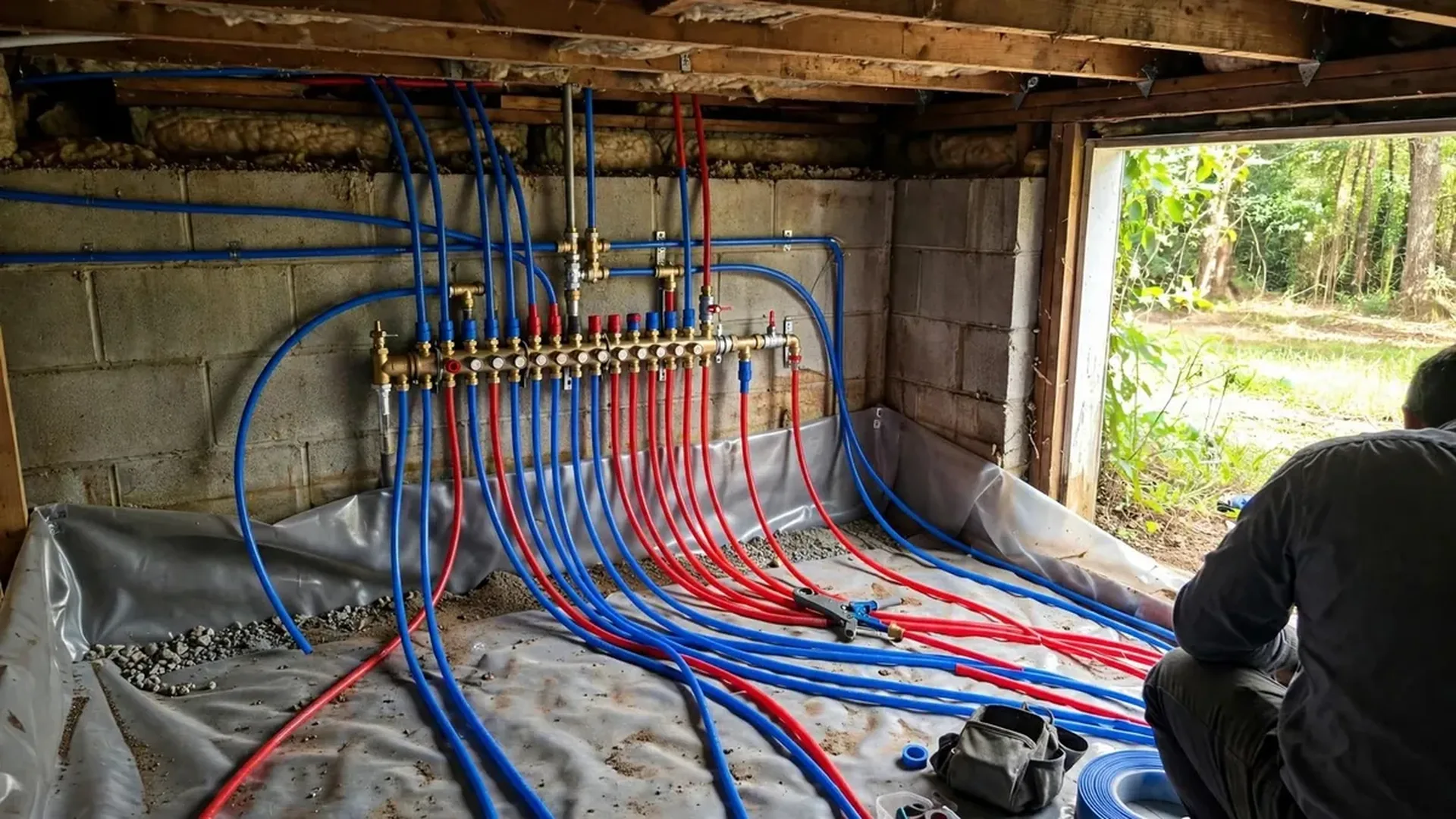
Repiping is planned work, and the best time to plan it is before the next leak. If your pipes keep failing, our team can walk the house and lay out options. Burst pipes still reach our 24/7 line.
Whole-house repiping in Wyoming means replacing the water supply lines inside your home with new copper or PEX, either all at once or room by room. It does not include the buried line from the street or the drain system.
Signs the pipes in your house are at the end of their run
Repeated leaks in different spots are the clearest sign. A patch on one pinhole is fine, but a second and third pinhole on the same run tell you the metal is thinning everywhere, not just at one point.
Other signs include brown or rusty water when you first open a tap, pressure that is weak at several fixtures, and flaking or crusty buildup on exposed pipe. Any one of these can have a smaller cause, so we test before recommending a full replacement.
Mid-century homes and the pipes inside them
Wyoming's fastest growth came in the post-war 1950s, after US-131 was approved, and many homes from that period still have original or early replacement plumbing. Some older houses were piped in galvanized steel, which corrodes from the inside, narrows over time and tends to lose pressure before it leaks.
If your home dates from that era, ask us to look at the pipe where it enters the basement and at exposed runs. Seeing the material on the first visit lets you plan repiping before a failure forces a rushed one. A magnet and a small scratch test can help sort galvanized from copper, though we confirm on site.
The permit and the inspector on a repipe
A repipe replaces water supply pipes, which puts it squarely under Wyoming's permit rule and the 2021 Michigan Plumbing Code (based on the 2021 IPC). The permit holder schedules inspections with at least 24 hours' notice.
A Michigan plumbing contractor must hold a master plumber license or employ a master plumber as representative. Ask who holds it for your repipe, and verify with LARA before pipe is cut.
Copper, PEX and galvanized steel side by side
Most repipes use copper or PEX. Galvanized is mostly what you are replacing, not what you are installing.
| Material | Strengths | Trade-offs |
|---|---|---|
| Copper | Long track record, rigid, handles heat well | Costs more, takes more labor, can pit in aggressive water |
| PEX | Flexible, fewer fittings, quieter, quicker to run in walls | Not for outdoor sun exposure, needs approved fittings |
| Galvanized steel | Was common in older homes | Corrodes inside, restricts flow, difficult to repair |
| CPVC | Lower cost, easy to join | More brittle with age, less common in new work |
We recommend a material based on your house, your water and your budget, not on a fixed preference.
Whole house or one section at a time
Repipe the whole house when
- Leaks keep showing up in different rooms
- Most of the piping is galvanized
- You are already opening walls for a remodel
- Pressure and water color are poor everywhere
Replace a section when
- One run or one bathroom is failing
- The rest was updated in a past project
- Budget needs the work spread over time
- The main trouble is a single leaking branch
Want to see what is in your walls?
Call (855) 575-2890 and we will set up a visit to inspect the pipe.
How a repipe is phased so you can keep living there
Repiping is disruptive but rarely requires leaving the house for long. A phased plan keeps water on as much as possible.
- 1
Survey and plan
We trace the existing lines, decide where new pipe will run and mark where access holes are needed.
- 2
Permit and scheduling
The permit is filed before work starts. We schedule around inspection windows so walls are not closed before approval.
- 3
Rough in the new lines
New supply runs go in beside the old ones, usually through basements, closets and the least disruptive routes.
- 4
Switch over and test
We connect the new lines to the main and fixtures, then pressure test every joint before opening the valve.
- 5
Close up and inspect
The inspector checks the work, old pipe is capped or removed, and access holes are ready for a drywall contractor.
Permit and inspection notes for the city
Wyoming requires a plumbing permit before replacement of water supply pipes, and the state requires a licensed plumber for this work unless the owner lives in the home. Contractors register with the city before applying, and the permit holder schedules inspections with at least 24 hours' notice, so build that wait into the timeline.
We pull the permit and handle the scheduling. Walls and ceilings stay open until the inspector signs off, so tell any painter or drywall contractor to wait for that date. Our team also works in Kentwood and nearby cities.
What repiping does not fix
New supply pipe will not cure a clogged drain, a failing water heater or a damaged line under the yard. It also does not replace drywall or paint, which a drywall contractor or painter handles after inspection.
If your biggest problem is a leak you cannot find, start with leak detection so we know whether repiping is really the answer.
What drives the price of a repipe
Repiping prices swing more than most plumbing work. You get a clear price before work starts.
Homeowner insurance usually does not cover a planned repipe, though a sudden leak and its damage may be covered, so ask your agent.
Call (855) 575-2890 for your real number before any work starts.
Pairing a repipe with other plumbing work
If you are already remodeling a kitchen or bath, repiping the supply lines at the same time saves opening the walls twice. Ask about new shutoff valves, a new water heater connection and any fixtures you plan to add through plumbing installation.
That bundling matters most for older homes where a single remodel often exposes pipes that were never meant to last this long. Even if you only replace one section now, we can leave tees and valves where future runs will connect.
Questions about repiping in Wyoming
If leaks are repeating in different places, or you have galvanized pipe and falling pressure, a repipe is likely. One isolated failure usually just needs a repair.
It might, but many have been partly updated over the decades. We check the actual pipe, since the age of the house alone does not settle it.
Yes, the city requires a plumbing permit before replacing water supply pipes. We pull it for you and schedule the inspection.
Usually only for stretches of the day when we connect and test. We plan the phases so you are not without water overnight.
Yes, approved PEX is widely used for home supply lines. It needs approved fittings and protection from sunlight, which we handle.
Close the main valve and call our 24/7 line. We repair the failure first and then adjust the repipe plan.
Plan your repipe on your timeline
We explain the options and give a clear price before work starts at (855) 575-2890.