
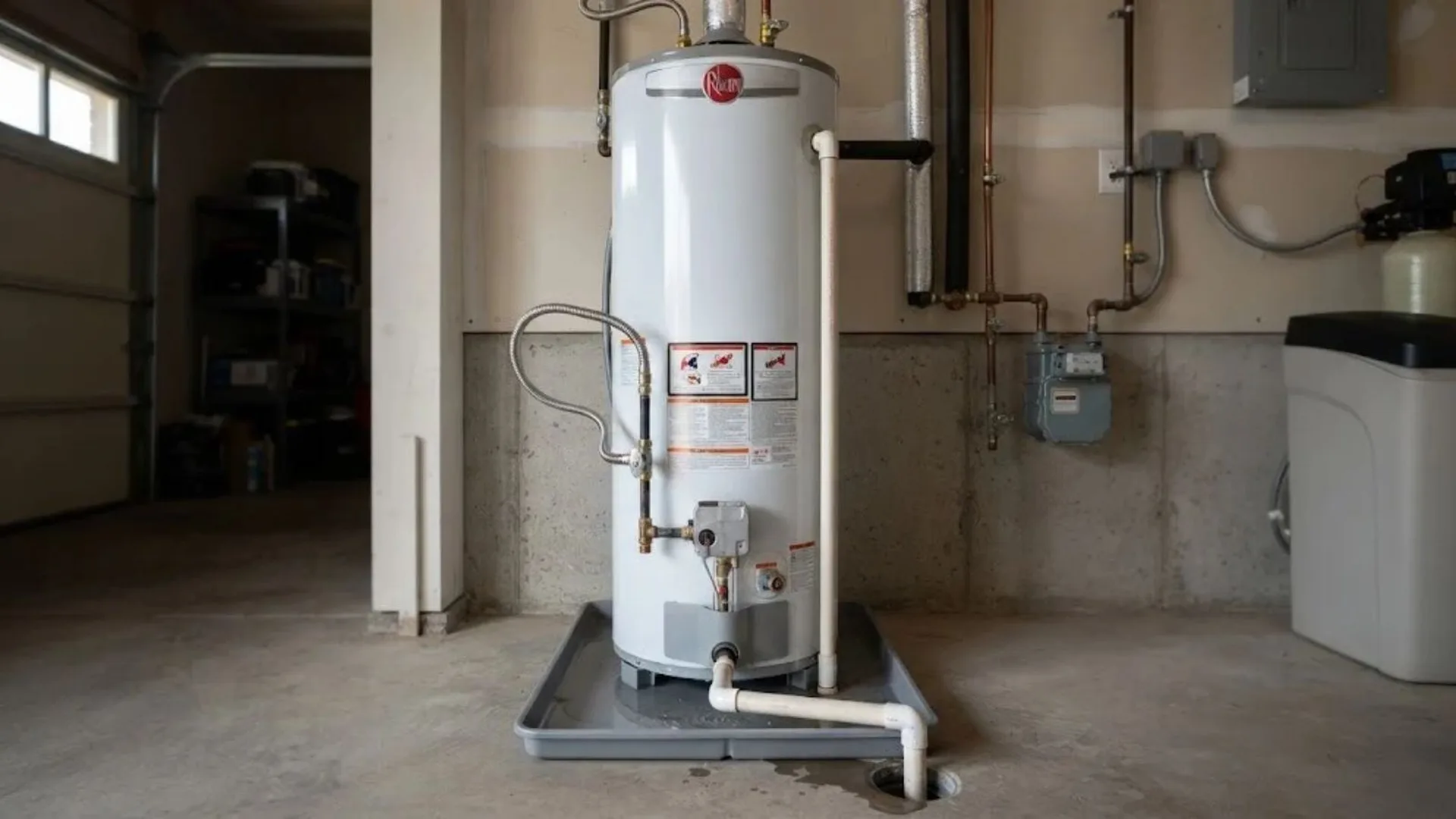
A typical call starts like this: the tank is leaking at the base, the floor is wet, and the owner wants to swap it out this weekend. Replacing a gas water heater is possible for a skilled owner, but it involves gas, venting, and a city permit, so many people hand it to a plumber.
The job has five parts: shut off gas and water, drain and remove the old tank, set and connect the new one, vent it correctly, and test for leaks. If you smell gas at any point, leave the house and call 911 or the gas utility from outside. For a hands-off route, see water heater replacement.
Gas, fumes, and the line you do not cross
A gas leak or a bad vent can hurt people quickly. Do not use flame to check for leaks. Use soapy water on every gas joint, and look for bubbles. If the burner will not stay lit, or the flue spills exhaust into the room, stop.
Carbon monoxide has no smell. Make sure a working detector is near the heater and the bedrooms before and after the job.
Do it yourself or hire it out
Reasonable for a handy owner
- Same fuel, same size, same location.
- Existing gas shutoff, vent, and connections are in good shape.
- You are comfortable testing gas joints with soapy water.
- You will pull the permit and schedule the inspection.
Better left to a plumber
- Moving the heater or changing the vent route.
- Corroded, kinked, or undersized gas line.
- Switching to a different size or type of unit.
- Any doubt about combustion air or exhaust.
Swapping the tank
Plan on a few hours and a helper, because a full tank is heavy even after draining.
- 1
Turn off the gas and water
Close the gas valve to the heater and set the control to off. Shut the cold supply valve above the tank.
- 2
Drain the tank
Open a hot tap upstairs, attach a hose to the drain valve, and drain to a floor drain or outdoors. Let the water cool first because it can scald.
- 3
Disconnect everything
Loosen the gas union, remove the flue pipe, and unscrew the water connectors. Cap the open gas line if you leave the area.
- 4
Move the old tank out
Use a hand truck and a helper. Keep the tank upright to avoid spilling the remaining water.
- 5
Set and level the new heater
Place it on a flat, solid base within the clearances on the label. Install a drain pan if your setup calls for one.
- 6
Connect water, gas, and vent
Use new flexible water connectors and a new gas connector. Attach the vent with a continuous upward slope and secure joints per the manual.
- 7
Install the relief valve and discharge pipe
The temperature and pressure relief valve needs a discharge pipe pointed to a safe drain. Do not cap it.
- 8
Fill, leak-check, and light
Fill the tank with a hot tap open until water runs steady. Check every joint, test gas fittings with soapy water, then follow the manual to light the burner.
Parts you replace and parts you reuse
Some old parts are worth keeping. Others should always be new.
| Part | Reuse? | Reason |
|---|---|---|
| Gas flex connector | Replace | Old connectors can crack or kink |
| Water flex connectors | Replace | Cheap, and a common leak point |
| Relief valve | Replace with new heater | Safety device, must match tank rating |
| Vent pipe | Inspect, replace if rusted | Corrosion can leak exhaust |
| Shutoff valves | Replace if stiff or weeping | Valves that fail later cost more to fix |
| Drain pan | Reuse if sound | Cracked pans will not catch leaks |
Choosing the replacement
Match the fuel and size to your household. A tank that is too small runs out of hot water, and one that is too large wastes gas heating water you do not use. Compare recovery speed and the warranty terms, since both affect long-term cost. Households in Kentwood face the same choice.
If you are open to a different style, a new water heater installation could include a tankless unit. That changes gas line size and venting, so ask before you buy.
Gas heater swaps: code, permit and manual
Replacing a hot water heater is on Wyoming's permit list. The install follows the 2021 Michigan Plumbing Code, based on the 2021 IPC, together with the manufacturer's instructions for venting and the gas connection.
An owner-resident may pull the permit, but a gas smell, a doubtful vent or an unsure connection is reason to hand the job over. The permit holder books the inspection with at least 24 hours' notice, so plan the swap around it.
Where first-time swaps go wrong
Reusing a tired gas connector
A flexible connector that looks fine can have a hairline crack. New ones cost little compared with a leak.
Skipping the leak test
Gas fittings must be checked with soapy water after the final tightening. A joint that held during assembly can still weep.
Flattening the vent slope
Exhaust needs a steady upward run to the chimney or outlet. A sagging section can spill fumes into the room.
Forgetting the relief discharge
A relief valve without a proper discharge pipe is a scald risk when it opens.
Before and after the swap
- Take a photo of the old heater's gas, water, and vent connections.
- Confirm the new heater matches the gas type your home uses.
- Make sure there is combustion air in the room and nothing stored near the burner.
- Apply for the permit before you start, and schedule the inspection afterward.
- Test a carbon monoxide detector after the job.
- Set the thermostat at a safe level to reduce scald risk.
Permits, gas, and water in Wyoming, MI
Natural gas service in this area comes from DTE Energy. If you smell gas or suspect a leak at the heater, leave the house and call 911 or the gas utility from outside. Do not try to find the leak yourself.
The city requires a plumbing permit before work starts on replacing hot water heaters. Apply online through BSA Online or with a PDF or printed application, and the invoice is paid before the permit is issued. Call Building Inspections at 616-530-7285 with questions, and schedule the inspection with at least 24 hours' notice.
You must be licensed by the State of Michigan for that type of work, or be the owner and resident of the dwelling. Check any hired plumber on the State of Michigan LARA lookup before they start. City and neighboring reports put local hardness in the 140s ppm, so ask about flushing and anode rod checks to protect the new tank.
Questions readers ask about this job
It varies with water quality and use. Many tanks run for a decade or more, and hard water shortens that. If the tank is leaking, replacement is the usual answer.
It is possible, but it needs a proper electrical circuit and a different install. That is a plumber and electrician job. We handle the plumbing, not the electrical work.
Yes. The city lists hot water heaters among the work that needs a plumbing permit before it starts. Call Building Inspections at 616-530-7285 to apply, or ask your plumber to handle it.
Shut off the gas and call for help. A pilot that drops out can mean a venting or thermocouple problem, and it should not be ignored.
Only if it is damaged, undersized, or you are changing the heater type. Your plumber can check the existing line and say whether it should stay.
If the job turns out to be more than a weekend project, our team handles water heater replacement and water heater installation, and the same 24/7 line covers Grandville and Kentwood.
Leaking tank this weekend?
Call (855) 575-2890 for a licensed plumber who handles gas, venting, and the permit, with a clear price before work starts.