
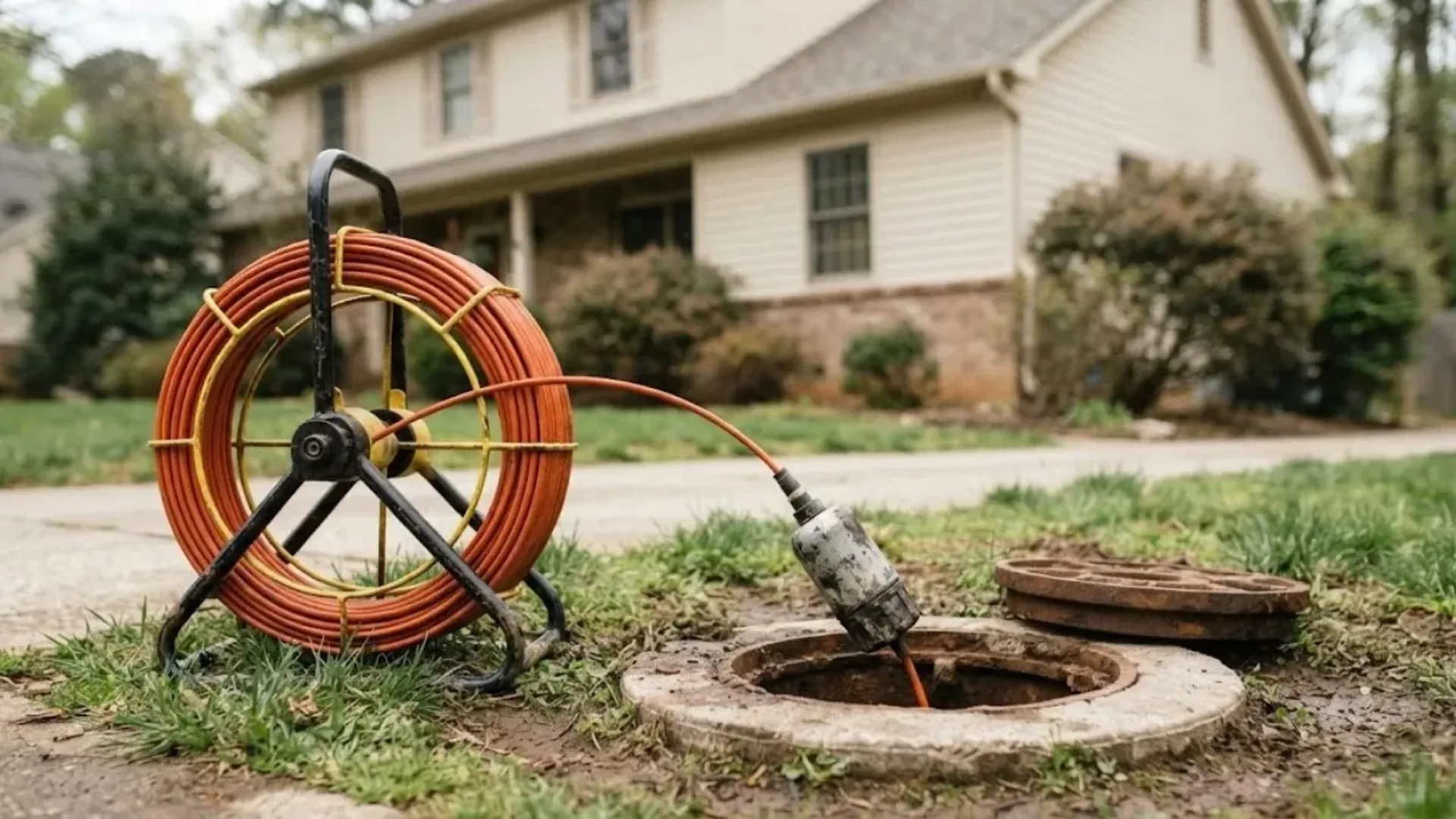
A sewer camera inspection in Wyoming is a look inside your drain line using a small waterproof camera on a flexible cable. The camera travels from a cleanout toward the street, sends live video to a monitor, and shows cracks, roots, sags and blockages that no one could see from above ground.
Most inspections are planned: before buying a house, after repeated clogs, or before a repair or lining job. If sewage is already backing up, our 24/7 line at (855) 575-2890 still answers, and the camera often comes after sewer line cleaning has opened the pipe.
How the camera goes through your line
The visit is straightforward, and most of the time is spent reading the footage rather than pushing the cable.
- 1
Find the way in
We look for a cleanout, usually a capped pipe near the foundation or in the basement. If none exists, we may enter through a toilet or roof vent.
- 2
Clear the line if needed
A heavily blocked pipe gives the camera nothing to see. A light cleaning first lets the lens travel and read the pipe walls.
- 3
Run the camera toward the street
The cable feeds slowly while we watch the screen. We stop at anything unusual: joints, bends, dips and changes in pipe material.
- 4
Track the distance and depth
A locator on the camera head lets us mark the line's path above ground and read how deep it sits at key points.
- 5
Review the footage with you
We play back the problem spots, explain what each one means, and tell you plainly which findings matter and which do not.
What a camera inspection does and does not trigger
A camera inspection looks at the pipe and changes nothing, so no permit applies. Repairs that follow, such as replacing a drain, do need a Wyoming permit and must meet the 2021 Michigan Plumbing Code, based on the 2021 IPC.
Ask for the recording so a second plumber can read it. The city accepts responsibility for sewer mains and right-of-way connections, so findings there go to Public Works first.
What the footage can show
A clear picture of the pipe replaces guesswork. These are the findings we see most.
Root intrusion
Thin hair roots at joints are common. A dense mass filling the pipe is a different story and points to a failing joint.
Cracks and breaks
A hairline crack and a split pipe look very different on camera, and they lead to different repairs.
Bellies and sags
A low spot holds water and waste. It often explains a line that clogs again and again despite cleaning.
Offset or separated joints
Ground movement can slide pipe sections out of line, creating a ledge that catches debris.
Scale and grease
Heavy buildup shows up as a rough, narrowed wall, and tells us whether jetting would help.
A change in material
Clay or cast iron connected to newer plastic often shows a transition point where trouble starts.
Matching the finding to the next step
The footage tells us whether the line needs cleaning, repair or just watching.
| What the camera shows | Likely next step | Urgency |
|---|---|---|
| Clean pipe, minor roughness | None, or routine cleaning | Low |
| Grease or scale buildup | Hydro jetting, then recheck | Moderate |
| Roots at sound joints | Cut and jet, consider lining | Moderate |
| Cracked or offset section | Spot repair or lining | Plan soon |
| Collapsed or heavily sagging pipe | Replacement of that section | Higher |
Cleaning options are described on our hydro jetting page, and the repair side is on sewer line repair.
Want to see inside the pipe first?
Tell us about the symptoms and we will book a camera visit before anyone digs.
Buying a house with an unknown sewer line
A pre-purchase inspection is among the most useful uses of the camera. A house can look perfect while its sewer lateral is cracked, rooted or collapsed, and that repair can be one of the larger bills a new owner faces. Seeing the pipe before closing gives you something concrete to negotiate with.
This is especially relevant in Wyoming, where much of the housing stock dates from the 1950s boom and may still have original clay or cast iron under the yard. We also see buyers crossing the Grandville line, a city that separated from Wyoming in 1933, and the age and material of the pipe can differ between neighboring blocks, so each line is worth viewing on its own. Our Grandville service page covers that area.
Locating the line before you dig
A camera with a transmitter can tell us where the pipe runs and how deep it is. That matters for anyone planning a patio, fence or tree, and for any excavation that follows a repair. Digging without knowing where the line is risks breaking it.
Before any dig, call MISS DIG 811 so public utilities can mark their lines. A private sewer lateral is often not marked by the utility, so our locate adds information that the public utility marking does not provide.
If the problem is under the street
Wyoming Public Works is responsible for sanitary sewer mains and the residential connections within the right of way. If the camera shows damage past the property line, the city coordinates that repair at no cost, and Public Works can be reached 24/7 at 616-530-7260.
We include the recording so you can show the city what we found. That saves time and avoids a dispute over which side of the connection the damage is on.
What you receive afterward
- A video recording of the inspection that you keep.
- Notes on distance from the cleanout to each notable finding.
- A plain-language summary of what is minor and what needs action.
- A marked path of the line at the surface, if you asked for locating.
- Repair or cleaning options with a clear price before any work starts.
- A recommendation on whether to recheck the line after cleaning or lining.
What affects the price of a sewer camera inspection
An inspection is usually a modest job compared with a repair, and you get a clear price before work starts.
Insurance does not usually pay for a planned inspection, though a sewer backup claim may need one as documentation, so keep the recording.
Call (855) 575-2890 for the real number, and ask about combining an inspection with a cleaning.
Questions about sewer inspection in Wyoming
Most inspections are done in a single visit. The time depends on access, line length and whether the pipe needs cleaning first, and we tell you what to expect when you book.
Yes. The camera head carries a transmitter, so we can trace the line at the surface and read its depth at key points.
It is a smart step for homes from the 1950s boom, which may have original clay or cast iron pipes. A recording of the line can support a repair request or price discussion.
Call Wyoming Public Works at 616-530-7260. The city handles sanitary sewer mains and the connections within the right of way at no cost to you.
It helps. Seeing the footage live lets us explain findings on the spot, and we can show you the problem spots rather than describe them.
No, it diagnoses. It tells you whether cleaning, lining or repair is needed, and nothing is done to the pipe unless you approve it.
Know your sewer line before you decide
Call (855) 575-2890 to schedule an inspection with a recording you keep.