
Basement waterproofing in Wyoming covers the drains, sump pits and pumps that collect groundwater and move it out of a house. We do the plumbing side of that work. We do not repair foundations, seal exterior walls or regrade a yard, and we will tell you when those are the right fix instead.
Before any system goes in, the first question is where the water comes from. A leaking supply line, a failed drain or groundwater pressing through a wall can look identical on a damp floor.
Is it a leak or is it groundwater?
The pattern of the water tells you more than the amount. This table helps separate the two.
| Clue | Points to plumbing | Points to groundwater |
|---|---|---|
| Timing | Wet all the time, or when a fixture runs | Wet after rain or snowmelt |
| Location | Near a pipe, heater or drain | Along the wall base or floor joint |
| Water meter | Moves with fixtures off | Stays still |
| Smell | Sewage or rusty water | Musty and earthy |
| Staining | Mineral trails below a fitting | White powdery deposits on masonry |
If the meter moves with every fixture off, start with leak detection, not a drainage system.
Safety steps when the basement is wet
- Stay out of standing water if outlets, the panel or appliances are nearby.
- Switch off power at the breaker only if the panel is dry and reachable without stepping in water. Otherwise call Consumers Energy.
- Do not plug in a wet vacuum or space heater on a wet floor.
- Call MISS DIG 811 before digging any exterior drain trench.
- Wear boots and gloves, ventilate the room, and keep children and pets out.
What a drainage system actually does
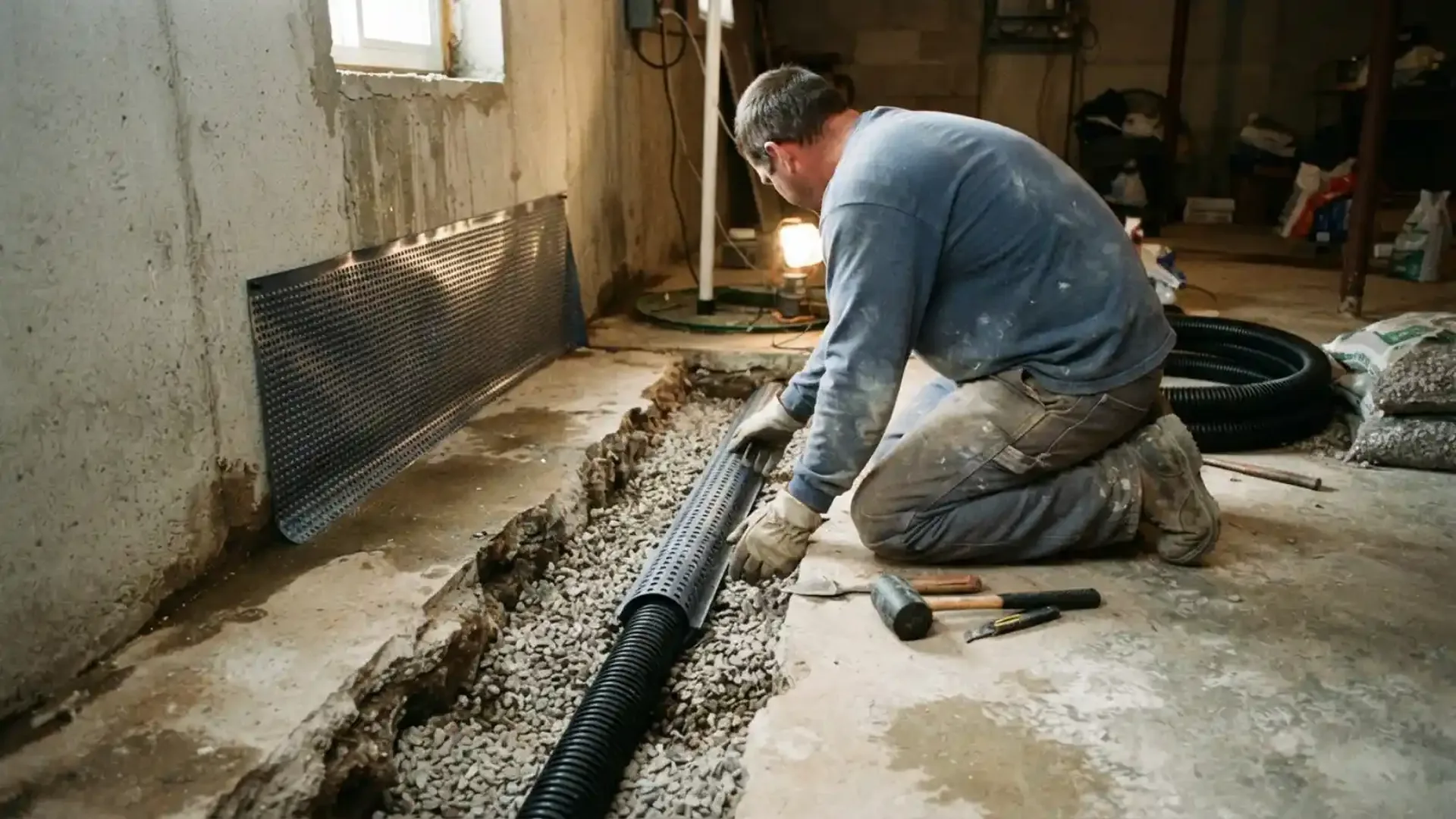
Interior drainage works by giving water a place to go before it reaches the slab. A channel is cut along the inside edge of the floor where it meets the wall, and perforated drain tile is set in gravel inside it. Groundwater that seeps through the wall or the joint falls into the tile, runs to a sump pit, and a pump pushes it outside.
This approach manages water instead of stopping it at the wall. It works well for seepage and wet floor joints. It does not fix a bowing wall, a cracked foundation or a downspout dumping water against the house.
Which code covers a basement drain system
Interior drainage that ties into a sump or a drain line is plumbing work under the 2021 Michigan Plumbing Code, which is based on the 2021 International Plumbing Code (IPC) and took effect March 12, 2024. Wyoming requires a plumbing permit when drain pipes are replaced or fixtures are added.
Grading and gutter changes sit outside that scope. Ask any contractor which parts of your job need a permit, and check their state license with the LARA licensee lookup before work starts.
How the pieces connect
- 1
Cut the floor edge
A narrow strip of the slab is opened along the wall, usually along the wettest sections.
- 2
Set the drain tile
Perforated pipe sits in clean gravel with a gentle slope toward the pit.
- 3
Install the pit
A sump basin goes in at the low point and receives all the tile branches.
- 4
Add the pump
A pump with a check valve and a discharge line lifts the water out of the house. Our sump pump page explains this part in detail.
- 5
Close the floor
The slab is patched with concrete, and the system stays accessible through the pit.
Wet floor and not sure why?
Describe when the water shows up and we will point you toward the right fix.
Homes that tend to need it
Homes near creeks and low spots
Houses near creeks and in low spots collect surface water and carry a higher water table. Basements there tend to see water at the floor joint first.
Older homes with no pit
Many mid-century basements were built without any drainage and rely on gravity and luck. A pit and tile can add protection with moderate disruption.
Homes with a pit but no tile
A pit alone catches only the water under it. Adding tile extends its reach around the room.
Finished basements
If the floor is finished, drainage work means pulling up flooring and drywall. Plan that before choosing a system.
Where we stop and someone else starts
Structural problems, such as horizontal cracks, bowing walls or a settling foundation, belong to a structural or foundation contractor. Exterior waterproofing, regrading, gutters and downspout redirection are also outside plumbing. Mold remediation and water damage cleanup need a restoration company.
If your water problem is outdoors, such as a leak in the street or yard, Wyoming Public Works handles outside water leaks and has staff on call 24/7. Call them for that, and call us for what is happening inside the foundation.
Permits and drain work
Wyoming Building Inspections requires a plumbing permit before work starts on replacement of drains. A tile system that connects into existing drain lines or adds a fixture-like drain generally falls under that rule. Ask us about the permit at the start, because the permit holder schedules inspections with at least 24 hours' notice and that timing affects when the floor can be closed.
Things to try before spending on a system
Many damp basements improve with simple outdoor changes. These cost far less than a drain system.
- Extend downspouts several feet away from the house.
- Clean gutters so they do not overflow against the wall.
- Check that the soil slopes away from the foundation.
- Look for window wells that hold water.
- Test your sump pump if you have one, and confirm its discharge works.
- Keep a log of when the water shows up, with rain and thaw dates.
When the water is not groundwater
A floor drain that backs up after heavy use is a sewer issue, not a groundwater one. If water appears at the drain, our sewer line repair work is the relevant service. For homes outside Wyoming, see our page for Byron Center, where some homes also rely on private wells and septic systems.
What shapes the price of interior drainage
Waterproofing projects range widely, so the quote follows the layout of your basement.
Most homeowner's policies exclude groundwater seepage, so a waterproofing system is usually an out-of-pocket improvement.
We give a clear price before work starts, so call (855) 575-2890 for your real number.
Questions about basement waterproofing in Wyoming
No. We work on plumbing-side drainage and sump systems. A structural or foundation contractor handles cracks, bowing walls and settlement.
Groundwater usually shows up after rain or snowmelt and appears along the wall base or the floor joint. A plumbing leak runs even in dry weather and often follows a pipe.
They solve different problems. Interior drainage manages water that has reached the wall. Exterior work tries to keep it from getting there, and that is a separate contractor.
Often yes. The city requires plumbing permits for replacement of drains and for adding fixtures. We tell you early if your job triggers one.
No system promises a bone-dry basement. It gives water a path out and lowers the chance of standing water.
Call our 24/7 line if a pump has failed or a pipe has burst. We can stabilize the plumbing, while cleanup and drying belong to a restoration company.
Give the water somewhere to go
Ask about a drain and pit layout for your basement.