
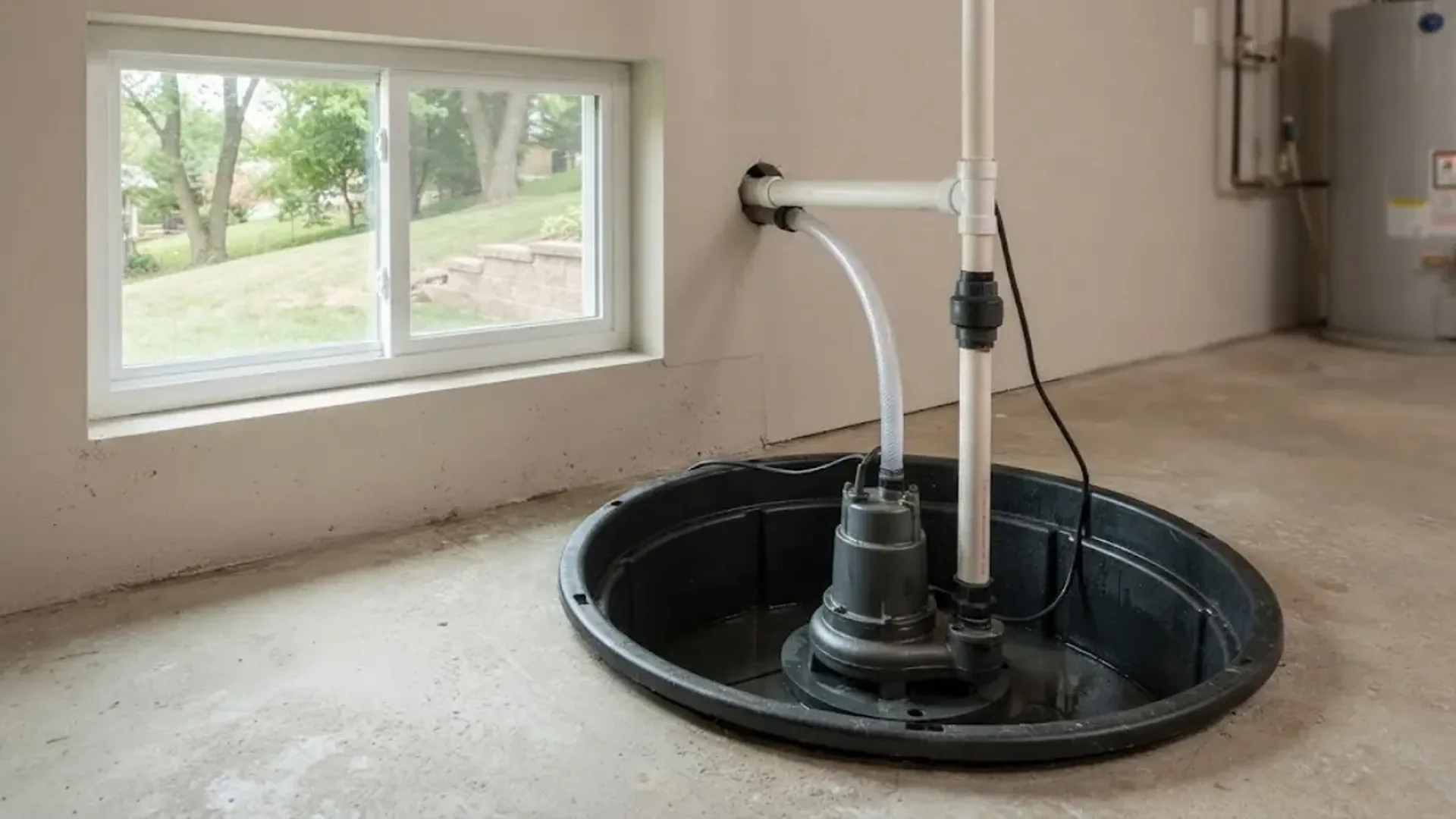
If water is rising in the sump pit and the pump is silent, call our 24/7 line right away, because a basement can take on water faster than most people expect. While you wait, unplug the pump, check that the breaker has not tripped, move belongings off the floor, and lift the float by hand to see whether the pump starts.
A sump pump collects groundwater in a pit below the basement floor and pushes it outside through a discharge line before it can rise to floor level. Sump pump repair in Wyoming usually means a switch, a motor, a check valve or a frozen line.
Pump stopped and the basement is close to flooding
Start with the simple checks. Is the pump plugged in, has a breaker tripped, and does the float move freely? If the float is stuck against the wall of the pit, nudge it free and see whether the pump kicks on.
If the pump still will not start, or it runs but the pit keeps filling, call. We dispatch overnight, on weekends and on holidays, and for storm-driven failures a same-day appointment is offered when available if the water is not yet above the pit.
- Unplug the pump before touching anything in the pit.
- Check the breaker and any GFCI outlet it shares.
- Lift the float by hand and listen for the motor.
- Move stored items and electronics off the basement floor.
- Use a wet-dry vacuum or bucket to hold the pit level if you can do it safely.
Why spring thaw and freeze-thaw cycles load the pump
Michigan winters leave frozen ground that sheds water instead of absorbing it. When spring snowmelt arrives along with rain, the ground around a foundation fills quickly, and a pump that sat idle for months must suddenly run for hours. Freeze-thaw cycles can also crack or heave drain tile and shift the discharge line.
This is why many failures cluster in late winter and early spring. A pump that has not been tested since fall is the one most likely to stick on its first long run of the season.
How sump pumps fail
Float switch
The float rises with the water and tells the pump to start. If it jams on the pit wall or tangles with its own cord, the pump either never runs or never stops.
Motor burnout
Pumps that cycle constantly or run dry overheat. Silt and debris in the pit speed this up.
Failed check valve
The check valve stops water from draining back into the pit after each cycle. If it fails, you hear a thump and the pump short-cycles.
Frozen or blocked discharge
If the outdoor end of the line freezes or clogs, the pump runs but the water has nowhere to go. A discharge that ends too close to the house also returns water to the foundation.
Power loss
Storms that take out Consumers Energy service at the wrong time stop an electric pump. Wyoming homes without a backup lose protection exactly when the ground is wettest, so a battery system is worth considering.
Repair, replace or add a backup
The right move depends on the age of the pump and what failed.
| Situation | Likely call | Why |
|---|---|---|
| Stuck float | Repair | Cheap, quick and common |
| Pump runs but moves little water | Replace | Worn impeller or clogged intake |
| Pump short-cycles | Check valve repair | Backflow into the pit |
| Pump is old and loud | Replace | Failure risk rises with age |
| Power outages in storms | Add a battery backup | No power means no protection |
| No pit at all | New installation | Needs a pit, pump and discharge route |
Pump quiet and the pit filling?
Call the 24/7 line before the water reaches the floor.
Battery backup versus relying on one pump
A single AC pump
- Lowest upfront cost.
- Stops when the power does.
- Works well if outages are rare and the water table is low.
- Needs periodic testing.
AC pump plus battery backup
- Keeps pumping through an outage.
- Needs the battery replaced on a schedule.
- Gives a second pump if the primary fails.
- Costs more upfront.
Testing your pump before the thaw
A short check in fall or late winter catches most problems early.
- 1
Inspect the pit
Lift the lid. Look for silt, gravel or debris and clear what you can reach.
- 2
Pour in water
Slowly add a bucket of water until the float rises. The pump should start and empty the pit.
- 3
Watch the cycle
Check that the pump shuts off cleanly and the check valve does not slam.
- 4
Check the outside end
Make sure the discharge is clear of snow, ice and leaves, and that it empties away from the foundation.
- 5
Test the backup
If you have a battery system, press its test button and confirm the alarm works.
Sewage ejector pumps are a different job
A sump pump handles groundwater. An ejector pump handles sewage from a basement bathroom or laundry that sits below the sewer line. The two are not interchangeable, and the pit must be sealed and vented for an ejector. If the pump serves a toilet, a failure means sewage backing up in the basement.
Call right away if an ejector alarm sounds. For the broader question of keeping groundwater out, see our basement waterproofing page.
New installs and extending the discharge
A new installation means a pit, a pump, a check valve and a discharge route out of the house. If the discharge needs to run farther from the foundation, someone has to dig, so call MISS DIG 811 before any digging starts. We also check for leaks around the pit that might be mistaken for groundwater with our leak detection methods.
What affects the price of sump pump work
Sump jobs run from a quick float fix to a full pit and pump installation.
Standard homeowner's policies often exclude groundwater and sump failure unless a water backup endorsement is added, so check yours before storm season.
You get a clear price before work starts, so call (855) 575-2890 for the real number.
Questions about sump pump installation & repair in Wyoming
Yes. The dispatch line is open 24/7 and storm nights are exactly when it is busiest. Call as soon as the pump stops, even if the water is still low.
Snowmelt and saturated ground push water into the pit continuously. That can be normal, but if it runs without ever stopping, the check valve or float may be failing.
Yes. If it ends outdoors in a spot where water pools or the exit is blocked by snow, it can ice over. A frozen line sends water back to the pit and burns out the pump.
If your basement has flooded before, or storms often take out power in your area, a backup is sensible. It also covers you if the main pump fails.
Some homeowners do. The tricky parts are matching the discharge fitting and the check valve, and making sure the new float has room to move.
Yes, we dispatch to Byron Center, Grandville, Kentwood and Walker.
Protect the basement before the next storm
We can test, repair or replace your pump and add a backup that runs when the power is out.