
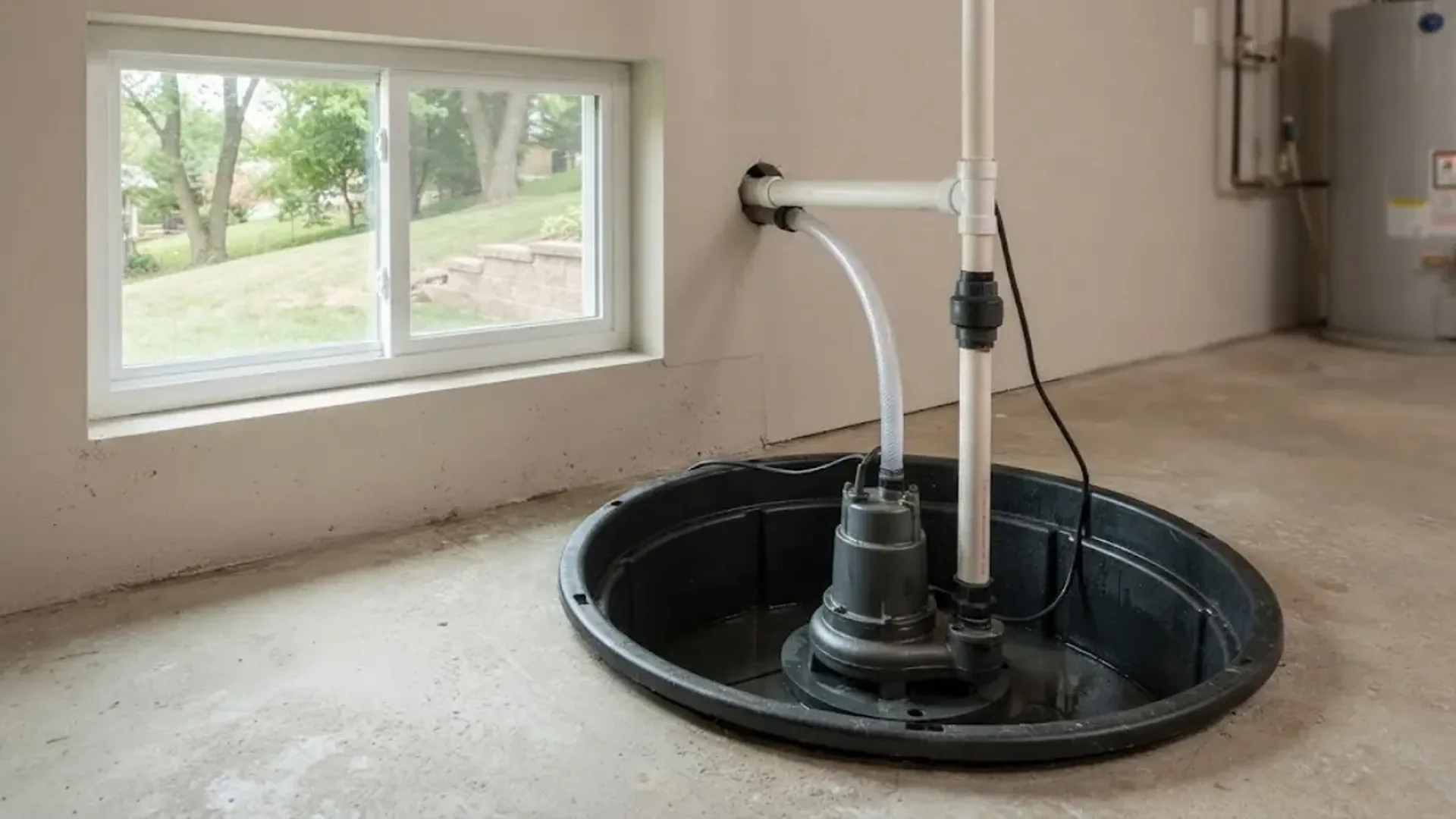
Installing a sump pump means digging a pit at the lowest point of the basement floor, setting a pump inside it, and running a discharge pipe to the outdoors. Replacing an existing pump is a straightforward afternoon job. Cutting a new pit through concrete is much harder, and most homeowners hire that part out.
Three things decide whether you should do it yourself: whether a pit already exists, where the water will go, and how comfortable you are with electricity near water. This guide walks through each so you can choose before you buy anything. For finished basements or a pit that must be cut new, a sump pump installation visit saves a lot of trouble.
Swap an old pump or start from scratch
Replacing a pump in an existing pit
- Pit, liner, and discharge line already in place.
- Mostly unplugging, unscrewing, and reconnecting.
- Doable for a careful homeowner in a few hours.
- Main risk is a mismatched check valve or float.
Installing a new pit and pump
- Requires cutting and removing floor concrete.
- Needs a liner, gravel bed, and a clear discharge route.
- Dust, noise, and heavy debris to haul away.
- Best handled by a plumber, with a dedicated outlet.
What to line up before you begin
- A grounded outlet with GFCI protection within reach of the pit, and not shared with a freezer.
- A pump sized for your basement. Ask a supplier about horsepower and head height for your discharge run.
- A check valve, sized to match the discharge pipe, to stop water from flowing back into the pit.
- Discharge pipe, fittings, primer, and cement rated for the application.
- A plan for where the water goes, away from the foundation and not onto a neighbor's property.
- A battery backup option, since storms often cut power when the pump matters most.
Electricity and water do not mix
Unplug the old pump or switch off its breaker before reaching into a pit. Never stand in water to work on a pump, and never rely on a wet cord. If the basement is flooded, do not enter until the power is shut off at the panel by someone who can do so from a dry spot.
Call before you dig outside. MISS DIG 811 marks buried utilities, and hitting a line is dangerous and expensive.
Installing the pump
These steps assume an existing pit. If you need a new one, stop after step one and call us.
- 1
Clear and inspect the pit
Remove debris, silt, and the old pump. Make sure the pit is deep enough for the new pump to sit upright with room for the float to move.
- 2
Assemble the discharge pipe
Attach the fitting to the pump, then a short length of pipe and the check valve with the arrow pointing away from the pump. Dry fit before gluing.
- 3
Set the pump and float
Lower the pump so it sits flat on the pit floor. Position the float so it moves freely and does not touch the sides.
- 4
Connect to the discharge line
Join the pipe to the existing discharge line with a rubber coupling. Drill a small relief hole in the vertical pipe below the check valve to prevent air lock.
- 5
Plug in, fill, and watch it run
Pour water into the pit until the float rises and the pump starts. It should run, empty the pit, and shut off cleanly. Check the outdoor end for steady flow.
Common trouble and what causes it
If the pump misbehaves on the first test, this table points to the cause.
| Symptom | Likely cause | Fix |
|---|---|---|
| Pump runs but moves little water | Air lock or blocked discharge | Check relief hole and outdoor outlet |
| Pump will not start | Float stuck or no power | Free the float, test GFCI |
| Pump cycles on and off rapidly | Missing or failed check valve | Install or replace the valve |
| Loud rattling | Debris in the impeller | Unplug and clear the intake |
| Water backs into the pit | Check valve installed backward | Flip the valve so the arrow points out |
Code points for a sump pit and its discharge
A sump pump install touches plumbing and electrical rules. Drain and discharge piping follows the 2021 Michigan Plumbing Code, based on the 2021 IPC and effective March 12, 2024.
Wyoming requires permits for adding drain piping, and an owner-resident may do their own permitted work. Wiring is electrical, and the manufacturer's instructions set mounting and float placement. Ask Building Inspections where your discharge may go.
Why a pump alone may not be enough
A sump pump moves water out. It does not stop water from coming in. If the pit fills constantly, or you see seepage at wall cracks and floor joints, the pump is treating a symptom.
Basement waterproofing addresses the entry points, such as drainage along the footing and sealing cracks. In many homes the combination works best: the pump handles the volume, and waterproofing reduces how much water arrives. We handle both for Wyoming and Kentwood homes.
Know when to hand it over
No pit exists
Breaking and replacing concrete requires tools and care to avoid damaging footings or drain tiles.
Water is already standing in the basement
Stay out until the power is off. Pumping out safely and checking for electrical hazards comes first.
The discharge route is unclear
Sending water to the wrong place can flood a neighbor or return it to your foundation.
A sewage smell or backup
That is a sewer issue, not a sump issue. The local section below covers who to call first.
Sump pumps and basements in Wyoming, MI
Michigan's freeze-thaw cycles and spring snowmelt load sump pumps hard. Test yours before the thaw by pouring water in the pit and confirming the float rises and the pump clears it. A pump that has sat quietly all winter is the one most likely to fail when the water arrives.
Much of Wyoming grew in waves, with the GUB area platted from the 1890s to the 1920s and a large post-war boom in the 1950s. Homes from those eras often have older foundations and drain tiles, so a pit that has never been touched may need inspection before you rely on it. If you are unsure, ask for a look at the pit and the discharge route together.
If your problem is sewage rising in a floor drain, call Public Works at 616-530-7260 before a plumber. The city accepts responsibility for sanitary sewer mains and the residential connection within the right of way, and staff are on call 24/7. If the backup starts on your private side, you hire the plumber. Building Inspections at 616-530-7285 can say whether your installation needs a permit.
Questions readers ask about this job
Replacing a pump in an existing pit is within reach of many homeowners. Cutting a new pit, wiring a dedicated outlet, or running a long discharge line is better left to a plumber.
It stops water already pumped up the discharge pipe from falling back into the pit when the pump shuts off. Without it, the pump cycles constantly.
Pour a few buckets of water into the pit until the float lifts. The pump should start, empty the pit, and turn off. Do this a few times a year.
Call Public Works at 616-530-7260 first. If the city side is at fault, the repair is coordinated at no cost to you. If the problem is on your private side, call us.
It is wise if your basement has flooded before. Storms often cut power, and a backup keeps the pump running when a regular pump would stop.
If the job turns out to be more than a weekend project, our team handles sump pump installation & repair and basement waterproofing, and the same 24/7 line covers Kentwood and Byron Center.
Pit needs a pro, or a rescue?
Call (855) 575-2890 for sump pump work, with a clear price before work starts and same-day appointments when available.